
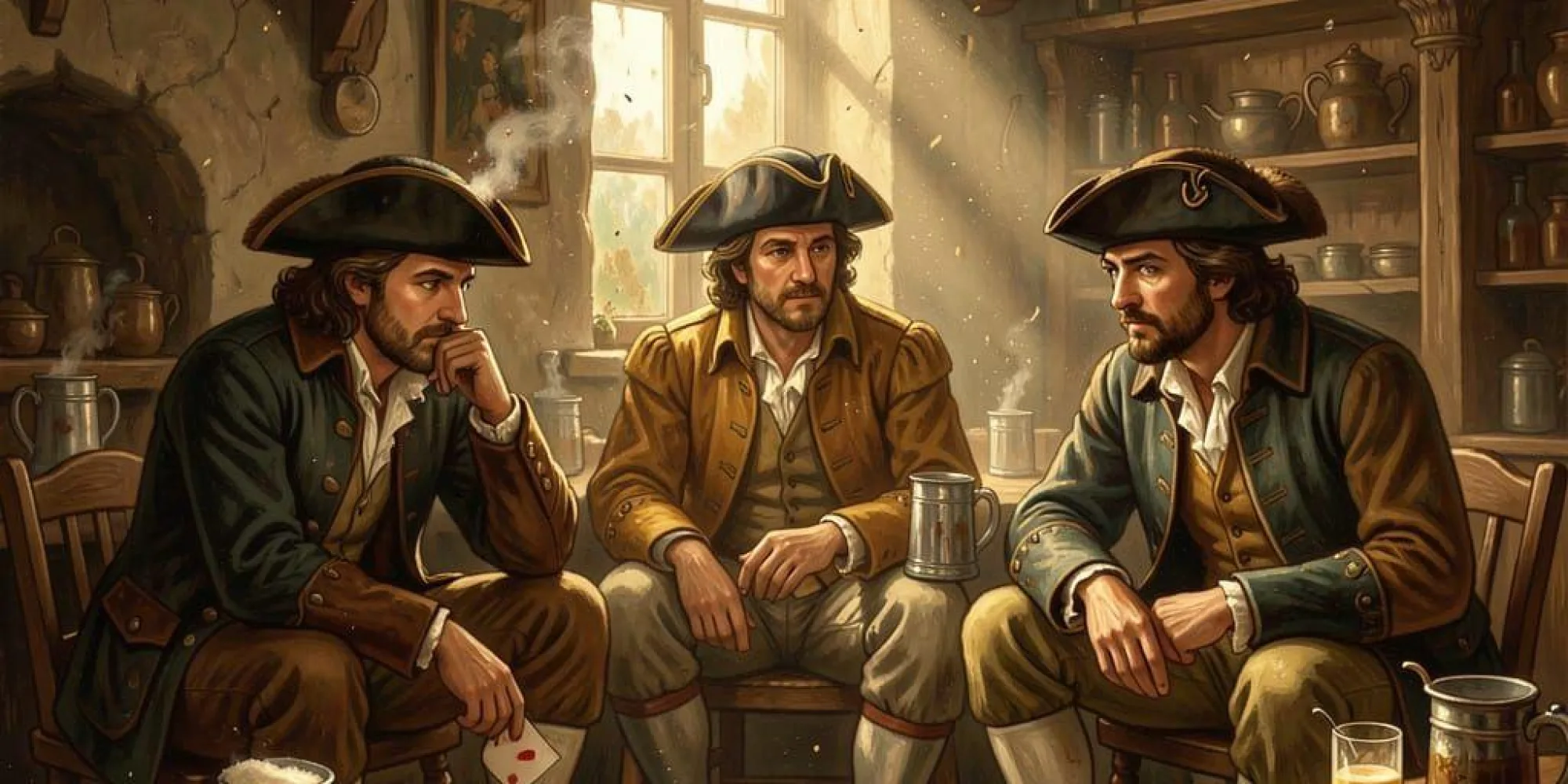
The Three Paralysis-Etters
The idea for this post did not arrive in a study or a monastery. It arrived in the front seat of my car while I was driving to Burnie, with three excuses ringing in my ears and Steven Bartlett’s latest doomsday guest still echoing in the background. It was one of those moments where unrelated noise suddenly lines up and produces clarity.
It started with Alison.
Someone scraped her Mercedes in the supermarket car park. It was a simple insurance job that would have taken five minutes of administration to initiate. But Alison is a world‑class procrastinator, and within about nine seconds she delivered a perfect trifecta of reasons why she could not possibly start. She did not know exactly where it happened, she did not know how much it would cost to fix, and she did not know what the excess was. Three excuses delivered in rapid succession, forming a neat cascade of reasons to remain perfectly still.
I smiled and suggested she spend thirty minutes coming up with forty excuses, and then forget all of them, because they were irrelevant. The car was started, the matter was parked, and I drove off.
Not long after, I turned on The Diary of a CEO and lasted about thirty seconds. Steven Bartlett was introducing a guest who apparently predicted the 2008 financial crisis (of course he did) and was now confidently predicting a global famine because, according to him, Trump was stupid and had blindly done what Israel wanted him to do. This followed a month‑long public spiral in which Bartlett had been wrestling with ageing and artificial intelligence apparently stalking him in his sleep. I switched it off.
By the time I reached Elizabeth Town to put fuel in the car, the doomsday noise had faded but the three excuses were still echoing. For reasons I cannot fully explain, those three excuses led me to The Three Musketeers, which in turn led to an idea that arrived fully formed: The Three Paralysis‑etters.
We all know The Three Musketeers, Alexandre Dumas’ 1844 adventure about d’Artagnan and his band of elite swordsmen battling intrigue, corruption, and their own emotional wiring. Athos is the noble brooder with a past. Porthos is the strong and vain loyalist. Aramis is the refined romantic torn between women and the priesthood. Their motto is simple and heroic: all for one, one for all.
Far less known, though vastly more common, are The Three Paralysis‑etters. Yes, I made up the word. No, it does not carry the same literary pedigree as a nineteenth‑century French classic. But their motto, excuses for one, one for excuses, at least nudges my literary credibility from the freezer toward room temperature.
The Three Paralysis‑etters are Perfection, Analysis, and Procrastination. Like their fictional French cousins, they battle their emotional wiring, except instead of fighting spies they fight movement itself.
Perfection Paralysis refuses to move until everything is perfect, which means, of course, that nothing ever happens. The world is perpetually one adjustment away from readiness, and readiness never arrives.
Analysis Paralysis is always busy and never productive. There is one more variable to consider, one more angle to examine, and one more spreadsheet to build. Thinking is mistaken for progress, and motion is indefinitely deferred.
Procrastination Paralysis is the superstar of the trio, the most valuable player, the chairman of the board, and the sage on the mountaintop all rolled into one. He rolls out excuses with the ease of a man whose brain is powered by sixteen thousand Nvidia chips. His signature line, delivered with spiritual confidence, is that he will do it tomorrow.
The Three Paralysis‑etters do not draw their swords to stop a treacherous spy. They draw their swords to stop themselves, and everyone upstream and downstream of their orbit. Nothing moves, and nothing improves.
Their fuel is fear. Fear of getting something wrong, fear of criticism, fear of accountability, fear of failure, fear of success, and fear of discovering they are not who they pretend to be. To keep these fears safely untested, neither proven nor disproven, they employ a simple strategy: they stand still.
The Three Paralysis‑etters live among us. They slow households, relationships, businesses, governments, not‑for‑profits, addicts in recovery, trauma survivors, and even people who claim to want personal growth. Whether the stated goal is losing weight, meditating more, or praying more, the effect is the same.
If they did not exist, civilisation would be centuries ahead of where it is now, which is how much damage they do. So what do we do about them. To paraphrase Gordon Gekko in Wall Street, excuses are for wimps.

About Jason Bresnehan
Jason writes in a modular, mind‑drift style that moves between business, recovery, faith, anthropology, and the oddities of everyday life without warning or apology. His work blends operator‑grade clarity with sideways narrative turns — the kind that start in a boardroom, drift through Scripture or Tasmanian riverbanks, and land in a piece of doctrine you didn’t see coming.
He has spent years helping organisations and people get unstuck, and his writing reflects the same instinct: take something messy, name it cleanly, and make it usable. His pieces — whether on addiction, Catholic symbolism, business operators, or human quirks — aren’t lectures. They’re field notes. Observations. Fragments designed for real people in real moments, including the tired executive delayed in an airport lounge at 11:45pm.
Jason publishes micro‑chapters as he writes them — standalone pieces that don’t follow a cadence or a theme. They accumulate over time into a larger body of work, shaped by curiosity, faith, operator discipline, and a refusal to perform — just get outcomes.
Founder of the Hadspen Foundation, Jason is committed to building frameworks for spiritual recovery that are both repeatable and personal. His writing is guided by discernment, narrative cadence, and the belief that doctrine should support—not overshadow—the human story.