
The Two Movies People Watch When They Hear My Accent
Tonight at dinner I watched something I’ve seen my whole life, but only just understood properly.
In America, when you’re dining alone, they seat you at the bar. It’s a cultural quirk you don’t see anywhere else — not Australia, not Europe, not Asia. If you haven’t been here, you wouldn’t know it.
So there I was, sitting at the bar, and I said a few words to the barman. He did that tiny micro‑shift people do when they hear an Australian accent. His eyes flicked sideways — not in judgement, but in recognition. And I could almost see the next step forming:
“Australian.”
Which means:
[insert cliché here]
The rugged bloke.
The practical bushman.
The easygoing larrikin.
The “nothing bothers me” operator.
He wasn’t reacting to me.
He was reacting to the Australian he’d invented.
That’s identity projection in real time — the moment when someone meets the story they’ve already written about you.
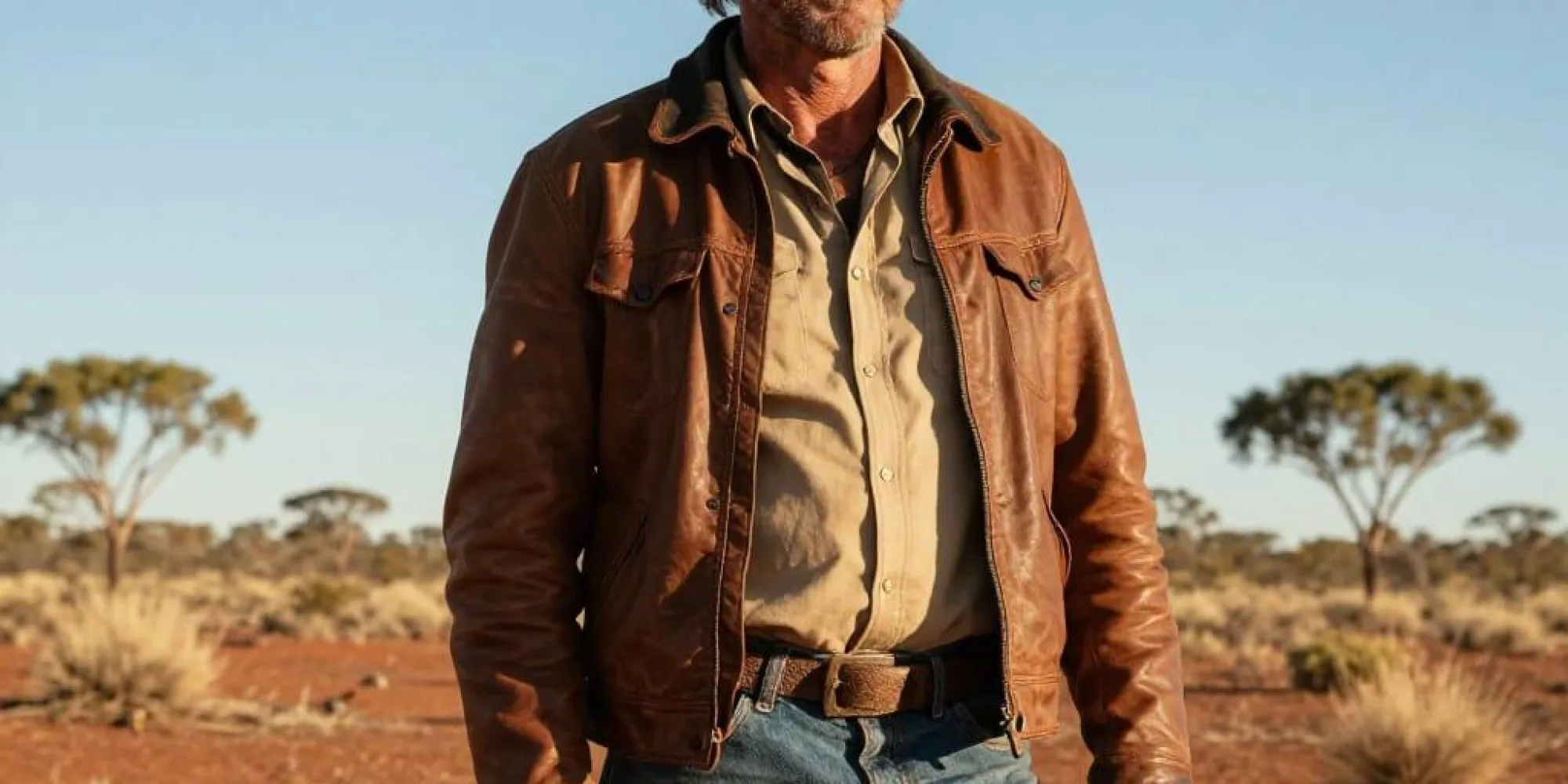
And it made me think of Crocodile Dundee, because that film is the perfect example of how different people project completely different stories onto the same person.
The Two Movies Inside Crocodile Dundee
1. The Male Movie
Men watched:
• the gruff bushman
• the competence
• the swagger
• the survival skills
• the laconic humour
• the unshakeable exterior
They weren’t watching a love story.
They were watching a fantasy of invulnerability.
And that’s the part that connected with me years later — not the romance, but the invulnerability mask.
The same performance of toughness, competence, and emotional bulletproofing that I tried to live up to in my own life.
Not because it was true, but because I thought that’s who I had to be.
2. The Female Movie
Women watched a completely different film:
• the cracks in the armour
• the innocence
• the emotional availability
• the vulnerability under the bravado
• the tenderness
• the slow reveal of his heart
They weren’t watching the mask.
They were watching the man underneath it.
That’s why the movie crossed over.
It wasn’t just funny or action‑packed.
It was dual‑coded storytelling.
The Doctrine Insight
Men watched the mask.
Women watched the man.
And:
Men saw the persona they wanted.
Women saw the person he actually was.
This is identity projection in cinematic form.
And it’s exactly what happens when I speak and people instantly invent “their Australian” — the one they expect, the one they measure me against, the one they’ve already written in their heads.
Why this matters.
Because this isn’t just about accents or movies.
It’s about:
• the fictional selves we build
• the masks we wear
• the personas people project onto us
• the gap between who we are and who they imagine
• the universal human desire to be seen without the costume
For anyone who’s lived behind a mask — especially in addiction — this lands even deeper.
Most addicts don’t just wear a persona.
They try to live up to it.
And recovery is the slow, liberating collapse of that fictional identity.

About Jason Bresnehan
Jason writes in a modular, mind‑drift style that moves between business, recovery, faith, anthropology, and the oddities of everyday life without warning or apology. His work blends operator‑grade clarity with sideways narrative turns — the kind that start in a boardroom, drift through Scripture or Tasmanian riverbanks, and land in a piece of doctrine you didn’t see coming.
He has spent years helping organisations and people get unstuck, and his writing reflects the same instinct: take something messy, name it cleanly, and make it usable. His pieces — whether on addiction, Catholic symbolism, business operators, or human quirks — aren’t lectures. They’re field notes. Observations. Fragments designed for real people in real moments, including the tired executive delayed in an airport lounge at 11:45pm.
Jason publishes micro‑chapters as he writes them — standalone pieces that don’t follow a cadence or a theme. They accumulate over time into a larger body of work, shaped by curiosity, faith, operator discipline, and a refusal to perform — just get outcomes.
Founder of the Hadspen Foundation, Jason is committed to building frameworks for spiritual recovery that are both repeatable and personal. His writing is guided by discernment, narrative cadence, and the belief that doctrine should support—not overshadow—the human story.