
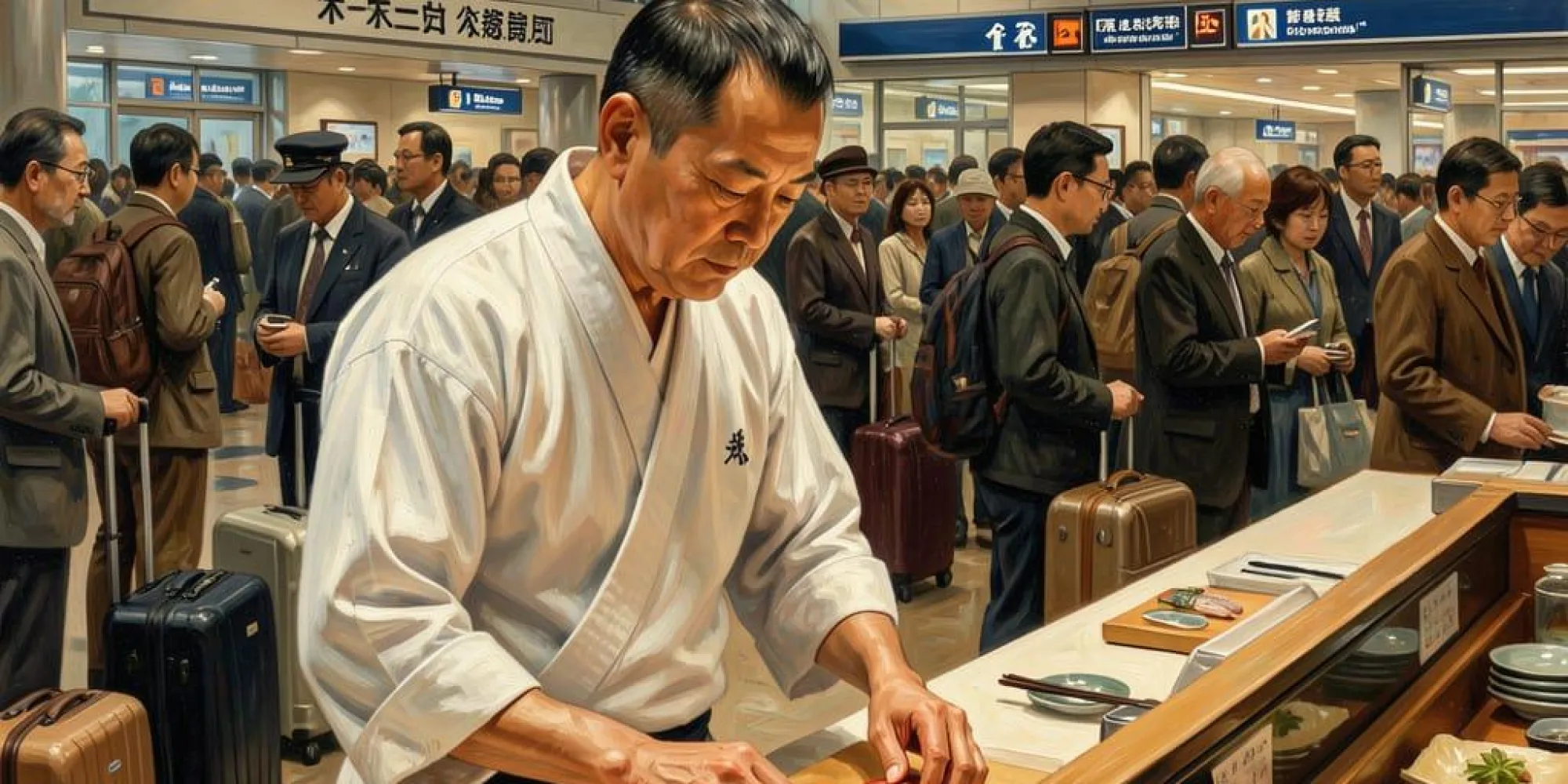
The Sushi Counter at Tokyo International Airport
At Tokyo International Airport — a place engineered for speed — the sushi counter refuses to rush. There’s a sign in English: Wait time: 20 minutes. The chef points to it with quiet authority. No premade trays. No shortcuts. No bending to the tempo of hurried Europeans, Americans, Australians, or the increasingly de‑traditionalised parts of Asia.
Even in an airport built for velocity, tradition holds the line.
Psychological and addiction‑recovery research points to the same pattern: tradition is a stabilising force.
• Cultural traditions shape how people understand addiction and whether they seek help.
• Spiritual traditions increase connectedness, reduce isolation, and strengthen resilience.
• Rituals and inherited practices provide continuity, predictability, and structure — all of which reduce relapse risk.
• Community traditions create belonging, accountability, and meaning — some of the strongest predictors of long‑term recovery.
Tradition steadies people.
It gives them an identity to stand in, a story to belong to, and a way of moving through the world that doesn’t collapse under pressure — the same way the sushi ritual refuses to collapse under the pressure of an international airport.
Ritual protects the integrity of the process.
Tradition protects the integrity of the person.
If Japan can protect the ritual of sushi in the middle of a global transit hub, recovery can protect the rituals that keep us sober in the middle of a chaotic life. And family traditions — the small, ordinary ones — can hold a family together tighter than people realise.
Don’t reject tradition. Its robustness is underestimated, and its power to unite is misunderstood.
Tradition is the slow, steady hand that keeps you whole when the world around you is moving too fast.

About Jason Bresnehan
Jason writes in a modular, mind‑drift style that moves between business, recovery, faith, anthropology, and the oddities of everyday life without warning or apology. His work blends operator‑grade clarity with sideways narrative turns — the kind that start in a boardroom, drift through Scripture or Tasmanian riverbanks, and land in a piece of doctrine you didn’t see coming.
He has spent years helping organisations and people get unstuck, and his writing reflects the same instinct: take something messy, name it cleanly, and make it usable. His pieces — whether on addiction, Catholic symbolism, business operators, or human quirks — aren’t lectures. They’re field notes. Observations. Fragments designed for real people in real moments, including the tired executive delayed in an airport lounge at 11:45pm.
Jason publishes micro‑chapters as he writes them — standalone pieces that don’t follow a cadence or a theme. They accumulate over time into a larger body of work, shaped by curiosity, faith, operator discipline, and a refusal to perform — just get outcomes.
Founder of the Hadspen Foundation, Jason is committed to building frameworks for spiritual recovery that are both repeatable and personal. His writing is guided by discernment, narrative cadence, and the belief that doctrine should support—not overshadow—the human story.