
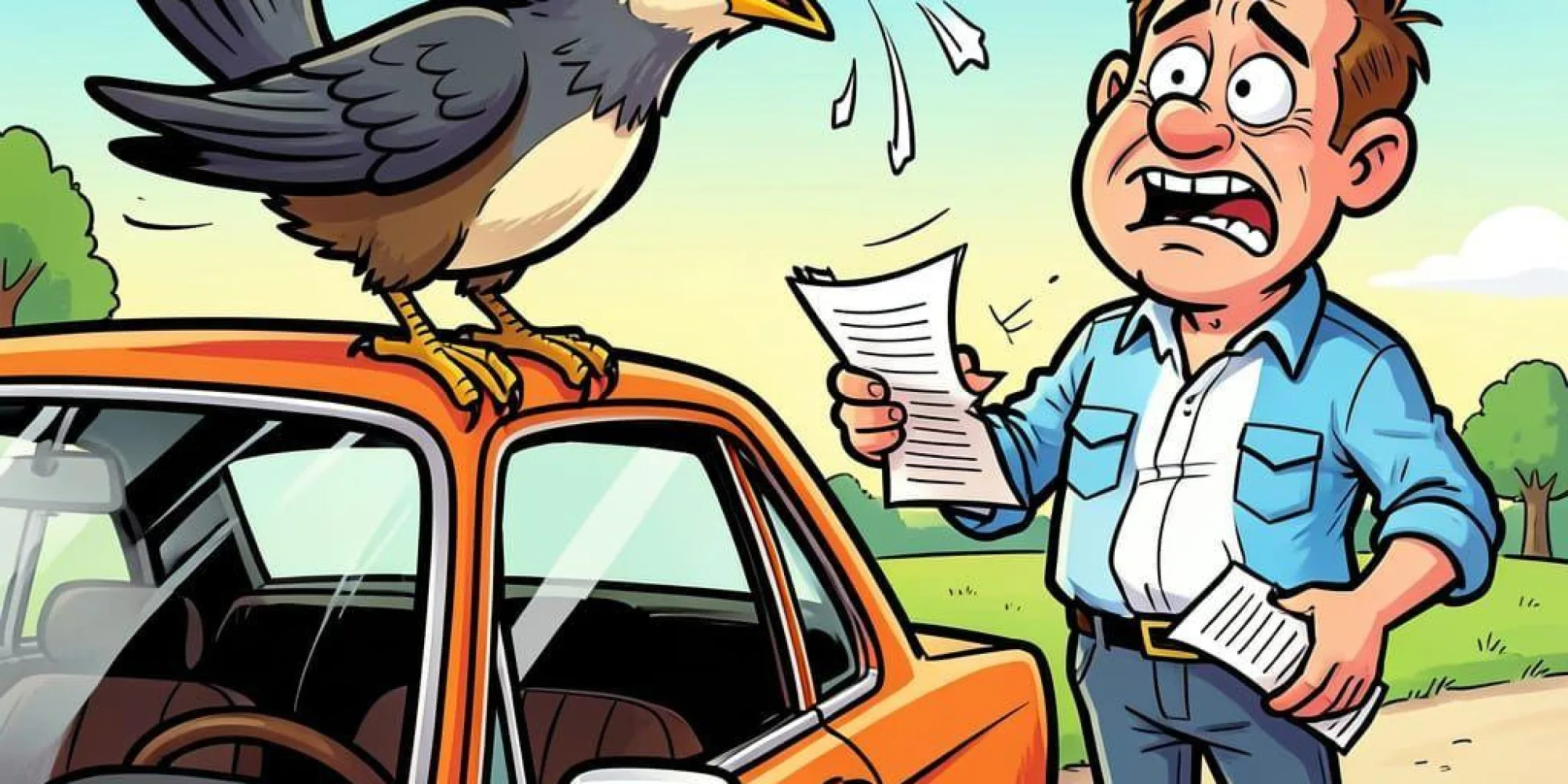
The Parrot That Rewrites Insurance Policies
Today I called into the local big‑box pet supplies store to get dog treats for Bentley the Golden Retriever, Basil the dopamine cat, and a 20 kg bag of large parrot seed. The guy in the store who often assists me is a big, strong New Zealander Māori, and when he graciously asked, “Can I help you with anything today?” I replied, “Yep, you can grab me one of the big bags of large parrot seed, please.”
By the time I got to the counter with Bentley’s and Basil’s treats, he asked, “What sort of birds do you have?” My reply was that I don’t have birds as such — I’ve just got a big garden and I put seed out for the wild birds. It attracts doves, galahs, and, unless you constantly disrupt the feed‑out time pattern, the noisy and arrogant white cockatoos take over. I added that the cockatoos are pretty smart: it only takes them about three days of putting seed out at roughly the same time before they muscle in, scare the doves and galahs away, demolish the seed, and then feign annoyance if you do something so terrible as going outside to hang clothes on the Hills Hoist or move a garden hose.
The pet‑food store manager said, “Have you heard of the New Zealand kea parrot? They put the cockatoos to shame with their antics — they’re little terrorists.” He told stories of kea parrots destroying cars and stealing shiny objects.
Suffice to say, this got my interest. And a little bit of web research later: yes, they are maybe not terrorists with a capital T, but they certainly are Cheeky with a capital C.
Kea birds, native to the alpine regions of New Zealand’s South Island, are notorious for their highly intelligent, curious, and “cheeky” behaviour, which often involves destroying cars and stealing shiny objects. Considered the world’s only alpine parrot, they use their strong, curved beaks to dismantle rubber seals, windshield wipers, and radio antennas on vehicles.
They frequently target parked cars in mountain car parks, specifically ripping off rubber window linings, plastic moulding, and windshield wipers. And they get even more personal at times because they are attracted to reflective and new objects, including keys, cameras, and jewellery.
Their destruction is often a form of play or investigation, driven by a high level of curiosity and problem‑solving skill, with some described as having the curiosity of a four‑year‑old child.
Extraordinarily, a kea can solve logical puzzles — pushing and pulling things in a certain order to get to food — and will work together to achieve a shared objective. They have been filmed preparing and using tools.
Besides car aerials and keys, keas are known to pull apart backpacks, tents, and hikers’ boots.
Affectionately known locally as the “Clown of the Alps,” they often gather at tourist hotspots, requiring some areas to introduce “kea gyms” to keep them occupied and away from cars.
Their impact is so great that this rightfully protected species attracts official New Zealand communiqués advising tourists to lock vehicles and keep belongings secure, and multinational insurance companies have exclusions written into rental car agreements.
I love the thought of this: kea birds have so much cheeky, intelligent energy that they’ve got government bureaucrats and insurance actuaries on the hop.

About Jason Bresnehan
Jason writes in a modular, mind‑drift style that moves between business, recovery, faith, anthropology, and the oddities of everyday life without warning or apology. His work blends operator‑grade clarity with sideways narrative turns — the kind that start in a boardroom, drift through Scripture or Tasmanian riverbanks, and land in a piece of doctrine you didn’t see coming.
He has spent years helping organisations and people get unstuck, and his writing reflects the same instinct: take something messy, name it cleanly, and make it usable. His pieces — whether on addiction, Catholic symbolism, business operators, or human quirks — aren’t lectures. They’re field notes. Observations. Fragments designed for real people in real moments, including the tired executive delayed in an airport lounge at 11:45pm.
Jason publishes micro‑chapters as he writes them — standalone pieces that don’t follow a cadence or a theme. They accumulate over time into a larger body of work, shaped by curiosity, faith, operator discipline, and a refusal to perform — just get outcomes.
Founder of the Hadspen Foundation, Jason is committed to building frameworks for spiritual recovery that are both repeatable and personal. His writing is guided by discernment, narrative cadence, and the belief that doctrine should support—not overshadow—the human story.