
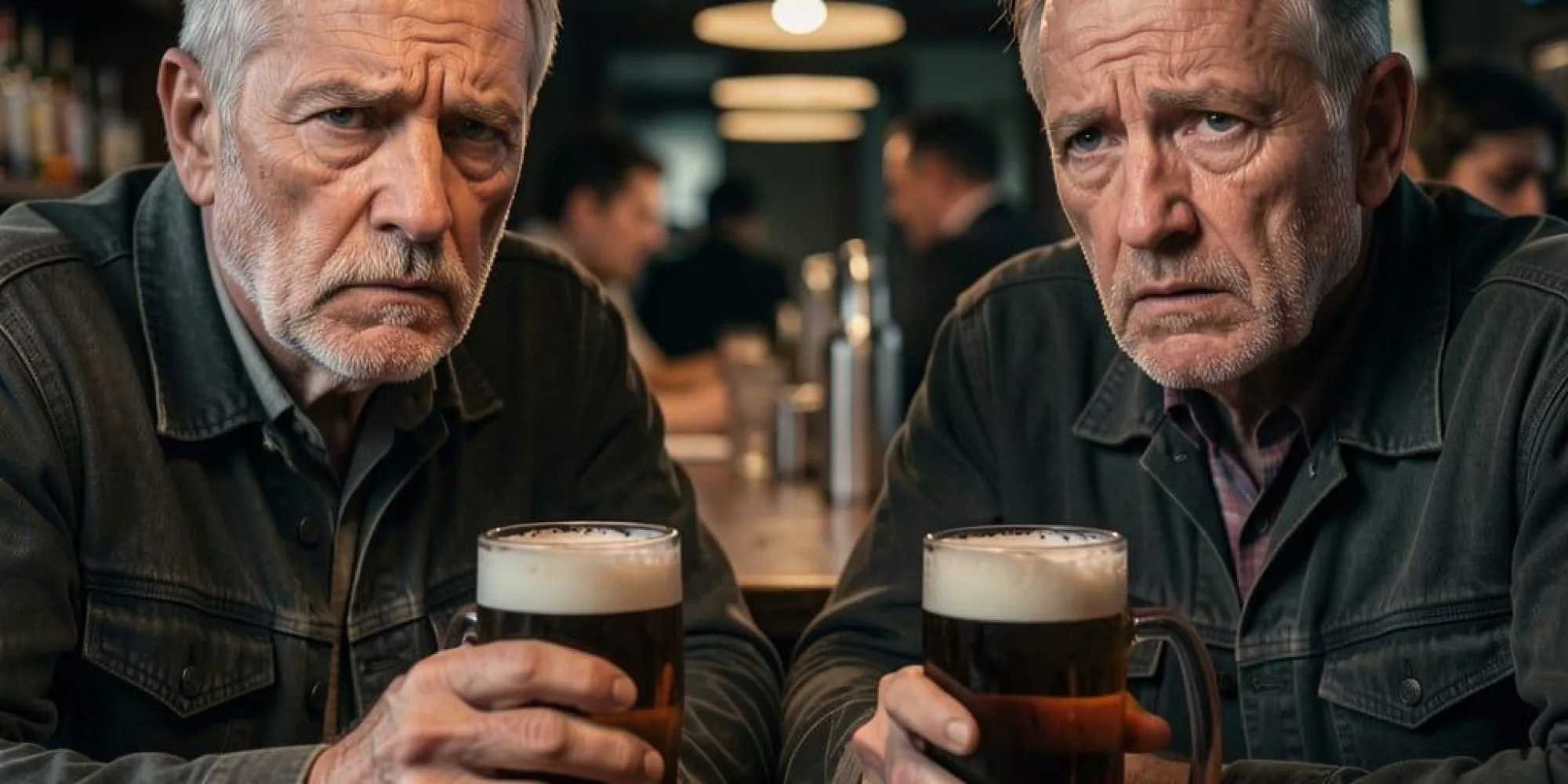
The Pain on Their Faces
There are places you return to so many times they become part of your personal geography — fixed points on the map of your life. Pattaya is one of mine. But on this thirtieth visit, something shifted. Not the city — that keeps changing in predictable ways — but the way I was moving through it. Nearly two years sober, and sobriety sharpens the noticing. It turns the familiar into something newly alive. And sometimes, if you’re paying attention, it hands you a moment that feels like luck, or grace, or both.
The city itself has changed. More hotels, more apartment blocks, more shopping centres. The air is cleaner thanks to EVs. The sidewalks are still poured by men in flip‑flops, concrete uneven, pavers crooked. The alcohol supply is unchanged. The party void remains — sub‑40 Americans, Europeans, Australians, and Indians chasing the next drink, while the seasoned expats pace themselves painfully, waiting for “Drink‑Allowed‑Time‑O’Clock.”
I’ve seen this movie twenty‑nine times before. But this time, I was noticing.
I caught up with some expat friends on Wednesday night, Friday night, Saturday, and again on Sunday. Ned and Tom are mechanical engineers — expats working out of a foreign‑owned factory in Rayong. Their days are spent solving fabrication, machining, and assembly problems alongside Thai teams, bridging technical standards, local practices, and production realities. They’re essential to keeping the whole operation moving.
I drank soda water in every encounter (“sodaaa” in Pattaya, “club soda” for my American friends). Ned and Tom had pushed the week as far as it would go — the after‑work steam release Monday through Thursday, rolling into “happy Friday,” marking the start of the weekend blowout that sometimes included 18 holes on a picturesque Pattaya course, but always with a 19th‑hole energy.
By Sunday night, though, their faces told the story. It was a look I know well from my own past: the coming‑down night. Their beers were nursed gently, their eyes full of the quiet dread of Monday. You could almost hear the inner dialogue: I’ll sort out problem A tomorrow, then move on to problem B.
It was the point of realisation — that maybe Friday and Saturday had been approached with too much enthusiasm. Because now Sunday had snuck up behind them, presenting the Monday reality. And I knew that by 5:15 p.m. Monday, the first thing they’d be looking for was a 7‑Eleven fridge stacked with Singha.
For me, Sunday night with Ned and Tom wasn’t about judgment — it was about recognition. Recovery, and especially AA rooms, teaches that even after decades of sobriety, newcomers remind us how bad it can get. This reminder wasn’t coming from people in recovery. It was coming from high‑functioning professionals who may drink too much — a real‑time telemetry reading that pain always follows the short‑term gain of drinking.
That was the grace.
In the rooms, old‑timers keep going back after twenty years to be reminded by newcomers how bad it can get. Out in the world, people like me practice saying “no” in real time — not in theory, but in the lived moment. Both are reminders of why people in recovery need to stay close to grace, and why we never forget what we’re not missing.
Grace is often nothing more than seeing the pain you once carried on someone else’s face and remembering why you put it down.

About Jason Bresnehan
Jason writes in a modular, mind‑drift style that moves between business, recovery, faith, anthropology, and the oddities of everyday life without warning or apology. His work blends operator‑grade clarity with sideways narrative turns — the kind that start in a boardroom, drift through Scripture or Tasmanian riverbanks, and land in a piece of doctrine you didn’t see coming.
He has spent years helping organisations and people get unstuck, and his writing reflects the same instinct: take something messy, name it cleanly, and make it usable. His pieces — whether on addiction, Catholic symbolism, business operators, or human quirks — aren’t lectures. They’re field notes. Observations. Fragments designed for real people in real moments, including the tired executive delayed in an airport lounge at 11:45pm.
Jason publishes micro‑chapters as he writes them — standalone pieces that don’t follow a cadence or a theme. They accumulate over time into a larger body of work, shaped by curiosity, faith, operator discipline, and a refusal to perform — just get outcomes.
Founder of the Hadspen Foundation, Jason is committed to building frameworks for spiritual recovery that are both repeatable and personal. His writing is guided by discernment, narrative cadence, and the belief that doctrine should support—not overshadow—the human story.