
The Gift of Less
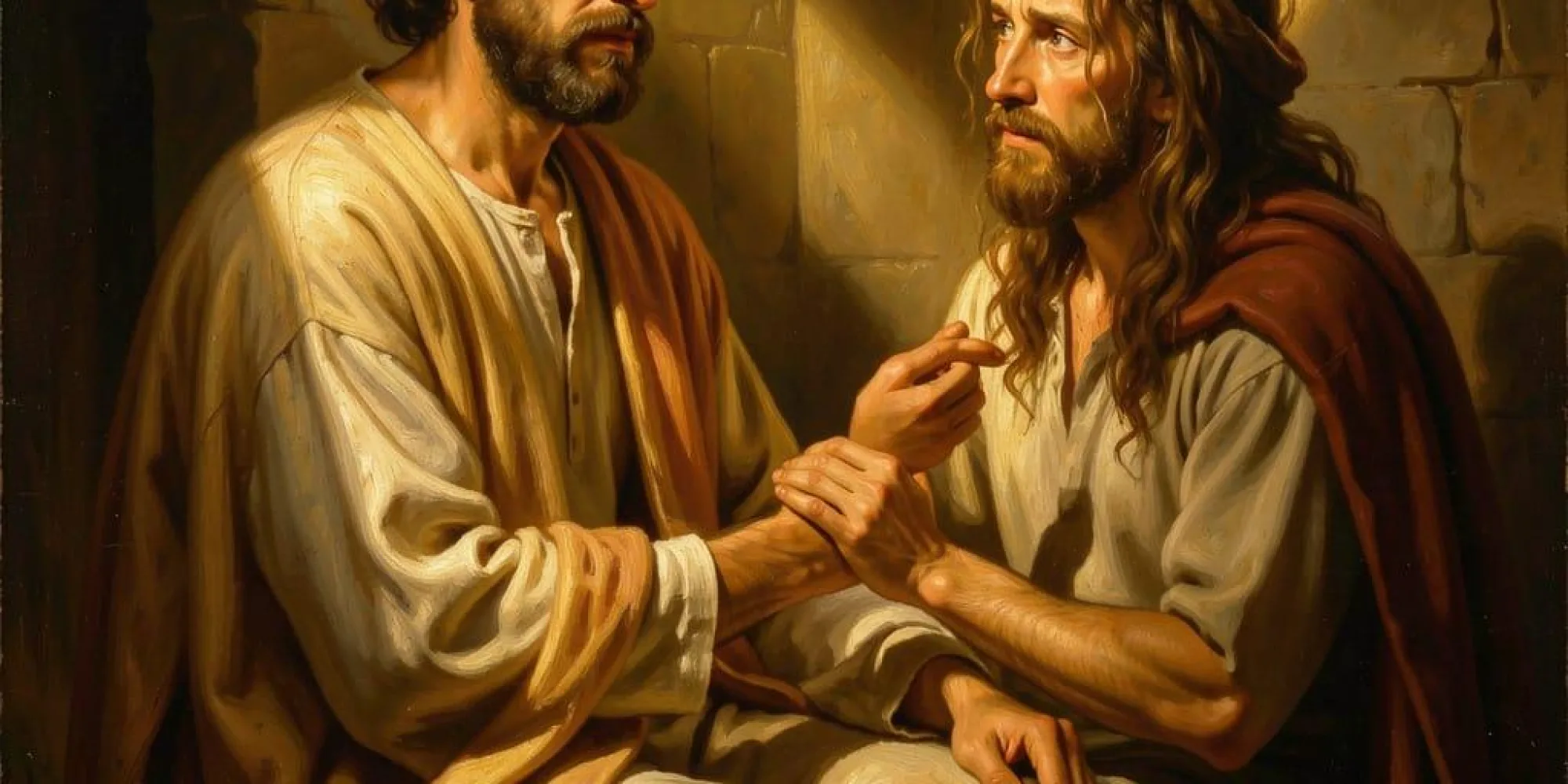
Recently, when I attended the Vigil Mass at the Church of the Apostles in Launceston, the parish priest, Fr Shammi Perera, began an excellent homily in response to the Gospel according to John 9:1–41.
At its heart, this Gospel is about a blind man — a man who, in the eyes of the world, lacked something essential, yet in the eyes of Christ, lacked nothing at all.
The blind man becomes the one who sees.
The sighted become the ones who are blind.
The world is inverted, and truth is revealed through the very thing people assume is a limitation.
Fr Shammi opened with a history lesson — a quiet procession of names that spanned nearly two millennia after the death of Christ.
He spoke of Homer, John Milton, Ludwig van Beethoven, and Thomas Edison.
Four men separated by centuries, cultures, and continents, yet united by a single thread:
each carried a disability that the world assumed would prevent greatness.
Homer, the blind poet whose epics shaped Western imagination.
Milton, who dictated Paradise Lost from the darkness of his own eyes.
Beethoven, who wrote the Ninth Symphony in a world of silence.
Edison, who reshaped modern invention while profoundly hard of hearing.
At first glance, these men appear diminished.
But history, science, and spirituality all tell a different story.
Sometimes the loss of one sense becomes the awakening of another.
Sometimes the narrowing of the outer world becomes the widening of the inner one.
Sometimes the absence of noise becomes the birthplace of clarity.
And sometimes, as in the Gospel, the man who cannot see becomes the only one who truly does.
The Proposition
Sitting in the pew, I found myself thinking:
What if these men were not great despite their limitations, but because of them?
What if the absence of a sense — sight, hearing, or something else — forced the mind to cultivate deeper capacities?
What if the narrowing of perception sharpened attention?
What if the quieting of one channel amplified another?
What if the world’s idea of “less” was actually the soul’s doorway to “more”?
If this proposition holds — and history suggests it does — then it stands to reason that deliberately inhibiting our senses might awaken something dormant within us.
Not harming them.
Not damaging them.
But curating the environment so the mind can finally hear itself think.
A tranquil place where the only sound is wind through trees.
A single landscape with no visual clutter.
A room with one candle.
A coastline where the horizon is a straight line of truth.
A chapel where silence is the only language.
These are not escapes.
They are reductions — intentional narrowing of sensory input so the inner world can expand.
The monks knew this.
The prophets knew this.
The desert fathers knew this.
Writers know it.
Musicians know it.
Anyone who has ever needed to hear the quiet voice beneath the noise knows it.
And the blind man in John 9 lived it.
The Blind Man and the Four Greats
The blind man is not healed because he is broken.
He is healed because Christ reveals that his blindness was never the problem.
The real blindness belonged to those who assumed they could see.
Homer’s blindness gave him mythic sight.
Milton’s darkness gave him theological depth.
Beethoven’s silence gave him internal symphony.
Edison’s partial deafness gave him focus.
Each man lost something the world values.
Each man gained something the world cannot measure.
Their greatness was not an accident.
It was a reallocation of attention.
The mind, when deprived of one path, builds another.
The soul, when stripped of noise, finds its own voice.
The spirit, when forced inward, discovers its architecture.
Awakening the Giant Within
If losing a sense can awaken greatness, then perhaps quieting a sense can awaken clarity.
A walk in the bush.
A seat by the ocean.
A moment in a chapel.
A morning without a phone.
A night without a screen.
A day with only one landscape to look at.
These are not luxuries.
They are spiritual technologies.
They are ways of saying to the mind:
You may rest now. You may focus. You may see.
The blind man saw Christ before the sighted Pharisees did.
Homer saw the shape of heroism.
Milton saw the architecture of Heaven and Hell.
Beethoven saw the music of the universe.
Edison saw the future.
Sometimes the world becomes clearer when the world becomes smaller.
Sometimes the giant within wakes up when the noise outside goes quiet.
Sometimes the path to sight begins with closing your eyes.

About Jason Bresnehan
Jason writes in a modular, mind‑drift style that moves between business, recovery, faith, anthropology, and the oddities of everyday life without warning or apology. His work blends operator‑grade clarity with sideways narrative turns — the kind that start in a boardroom, drift through Scripture or Tasmanian riverbanks, and land in a piece of doctrine you didn’t see coming.
He has spent years helping organisations and people get unstuck, and his writing reflects the same instinct: take something messy, name it cleanly, and make it usable. His pieces — whether on addiction, Catholic symbolism, business operators, or human quirks — aren’t lectures. They’re field notes. Observations. Fragments designed for real people in real moments, including the tired executive delayed in an airport lounge at 11:45pm.
Jason publishes micro‑chapters as he writes them — standalone pieces that don’t follow a cadence or a theme. They accumulate over time into a larger body of work, shaped by curiosity, faith, operator discipline, and a refusal to perform — just get outcomes.
Founder of the Hadspen Foundation, Jason is committed to building frameworks for spiritual recovery that are both repeatable and personal. His writing is guided by discernment, narrative cadence, and the belief that doctrine should support—not overshadow—the human story.