
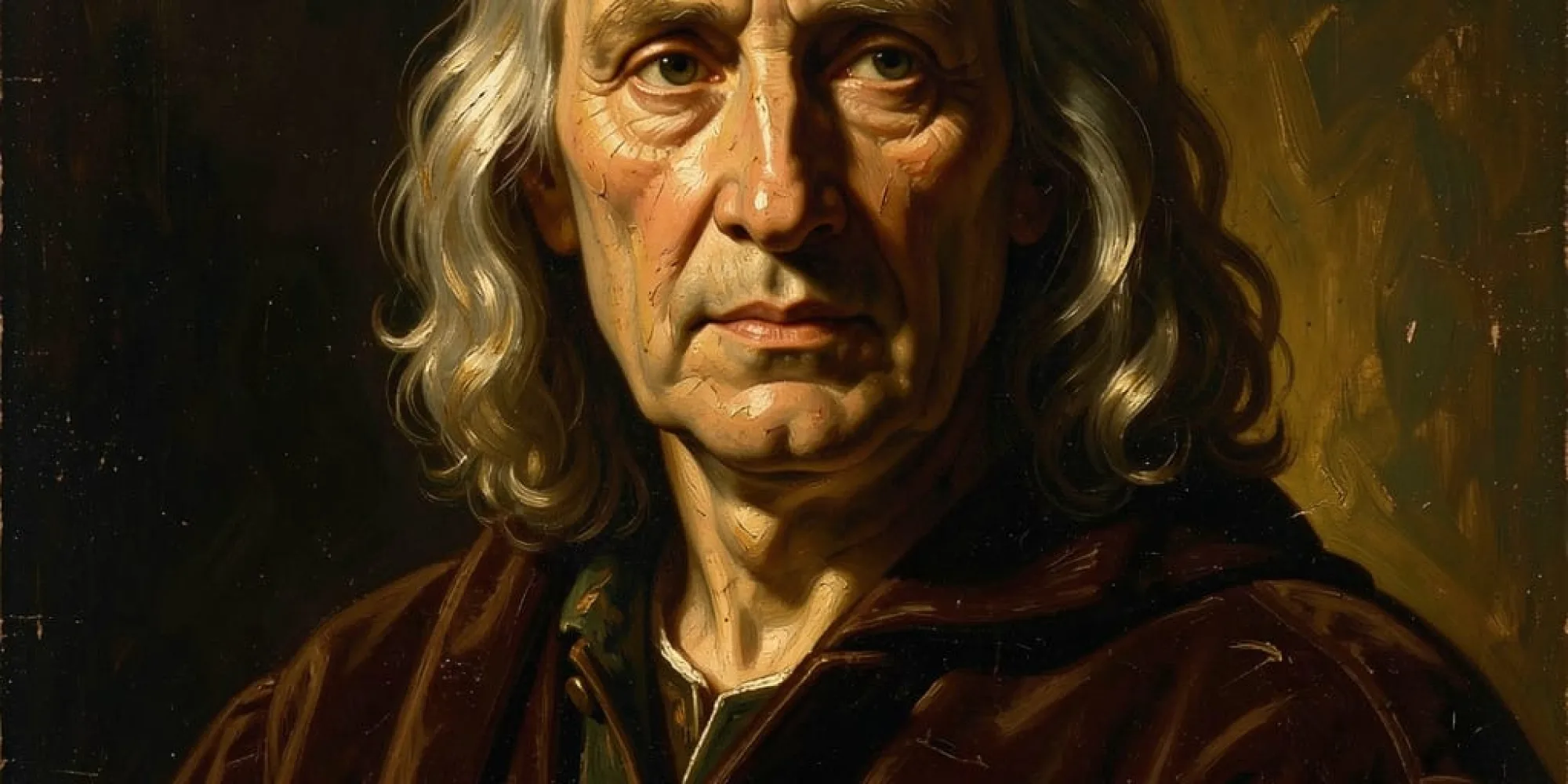
The Darkening of the Gift
There is a principle that sits quietly underneath every serious spiritual tradition, and it is so old that people forget it is there. God gives gifts. The adversary cannot match those gifts. So he works on the soul of the vessel to darken the gift’s expression. It is not balance. It is not a cosmic yin and yang. It is not two equal forces wrestling for symmetry. It is one force creating, and another force undermining. The gift is intact. The vessel is pressured. That is the pattern.
You can see this principle in the physical world without needing any theology at all. A tall athlete is built for the court. His height is an advantage in the place where his gift is meant to operate. Put him in an economy seat and the same height becomes a burden. His knees are jammed, his spine is compressed, and the world feels too small for the body he was given. Nothing is wrong with him. The environment is simply not built for the dimensions of his gift. The mismatch creates discomfort, distortion, and strain. If that can happen in the physical realm, it is not a stretch to imagine the same dynamic in the spiritual realm. A gift that shines in one context becomes a point of pressure in another. The gift is not the problem. The world around it is.
Painters of light are a clean example because their gift is so specific and so misunderstood. They are not painting light. Light is invisible. They are painting where light has been. They are painting the trace, the residue, the imprint of something that has already passed through the world. They are painting the memory of illumination. That ability is not technical. It is perceptual. It is a sensitivity to the invisible geometry behind the visible world. And whenever a human carries a gift that reveals what others cannot see, the adversary works on the soul of that human to darken the gift’s expression. Not because the gift is flawed, but because the gift is dangerous.
Leonardo da Vinci lived with a way of seeing that separated him from the world around him. His gift was not technique, although he possessed more of it than most painters ever will. His gift was the ability to understand the logic of light. He saw how illumination softened edges, dissolved boundaries, and revealed form not by outlining it but by shaping the air around it. His sfumato was not an effect. It was a recognition that reality is built from gradients rather than lines. He painted the conditions that make a face visible, the atmosphere that holds a landscape together, the subtle transitions that give a moment its truth. This was not a stylistic preference. It was a perceptual difference. He saw the invisible structure behind the visible world.
That way of seeing shaped everything he touched. His notebooks are filled with dissections, vortices, water studies, and observations of how light behaves when it meets matter. He was not collecting curiosities. He was trying to understand the rules that govern the world. He believed that truth lived in the transitions, in the way light wraps around a cheekbone or fades into shadow across a valley. Most people see objects. Leonardo saw the forces acting upon them. He painted not the thing itself but the way illumination reveals it. This sensitivity allowed him to create images that feel alive even centuries later, as if the light inside them is still moving.
The pressures he faced came not from the work but from the life around it. Leonardo lived in courts, workshops, and cities that valued him and used him but rarely understood him. He moved often, sometimes by choice, sometimes by necessity, and the instability of his circumstances created a distance between him and the world he inhabited. He was surrounded by people yet lived as if slightly apart from them. His projects were interrupted, abandoned, or redirected by politics, patronage, and the shifting priorities of powerful men. The paintings and drawings remained luminous. The pressure fell on the man instead. Isolation deepened, displacement repeated, and the sense of never fully belonging became a constant.
The contrast between the clarity of his work and the fragmentation of his life is striking. The paintings hold a calm that his days rarely achieved. The notebooks show a mind searching for order in a world that offered little of it. He could reveal harmony on canvas, yet he lived with a restlessness that never fully settled. The world he inhabited was too narrow for the breadth of his perception, and the mismatch shaped his entire existence. The gift remained bright, but the vessel carrying it moved through a landscape that was always slightly out of alignment with the way he saw.
Claude Monet worked with a sensitivity that made him attentive to the smallest shifts in atmosphere. He was not interested in objects any more than Leonardo was. He was interested in the way light behaved when it touched those objects, and how that behaviour changed from moment to moment. His series paintings—haystacks, cathedrals, poplars, water lilies—were not repetitions. They were studies of the same subject under different states of illumination. He was trying to understand how light altered the truth of a scene, how it shifted colour, softened edges, and changed the emotional temperature of a landscape. He painted the world’s memory of being touched by light at a particular hour. The movement is not in the brushstroke. It is in the light that has already passed.
Monet’s gift was sensitivity. He could see the slightest change in colour temperature, the way morning light carried a different emotional weight than afternoon light. Most people see a field. Monet saw the exact way the sun refracted through moisture in the air at a specific moment in early autumn. Most people see a façade. Monet saw the way stone absorbed and released light across the span of a day. This level of perception is not neutral. It exposes a person to more than the world is designed to hold. The gift remained bright, but the man carrying it lived under pressures that made the work harder to sustain.
His life was marked by emotional volatility and long periods of financial insecurity. The same sensitivity that allowed him to paint light with such delicacy made him vulnerable to every shift in circumstance. He felt deeply, reacted strongly, and lived with a nervous system that was always slightly over‑exposed. The pressures he faced were slow and grinding. He lost children, homes, and stability. He lived with the constant risk of being unable to paint at all. The world was too coarse for the delicacy of his gift, and the mismatch created an internal weather that never fully cleared.
The paintings glow with serenity, but the life behind them was turbulent. The gift remained bright, but the vessel carrying it lived under a pressure that threatened to extinguish it. The illumination and the instability sat side by side, neither diminishing the other.
Pablo Picasso saw the world as a set of simultaneous truths. He understood that light does not simply illuminate an object; it defines its planes, its angles, its internal architecture. A face is not one surface but many, each catching illumination differently. Cubism was not a rebellion against realism. It was an attempt to show all the truths of an object at once, all the ways light touches it, all the angles that exist simultaneously but are normally hidden. He was not breaking the world apart. He was revealing the complexity that had always been there. His gift was the ability to see multiple realities in the same moment and to paint the structure of those realities as if they were one.
Most people see a single angle because the brain collapses reality into a manageable frame. Picasso’s mind refused to collapse anything. He saw the front, the side, the underside, the shadow, the highlight, and the internal tension of a form all at once. This is not a comfortable way to live. It exposes a person to more information than the average nervous system can process. The gift remained bright, but the pressure fell on the man.
His life was marked by relational turbulence. The same perceptual intensity that shaped his art shaped his relationships. He moved through friendships, partnerships, and marriages with the same force he applied to his canvases. Stability was difficult. Harmony was rare. The world around him struggled to absorb the intensity he carried. The paintings remained powerful, but the man lived with a restlessness that never fully settled.
The fractures in his work and the fractures in his life mirrored each other. The illumination and the agitation existed together, neither cancelling the other.
Van Gogh lived with a sensitivity that made ordinary life difficult and made extraordinary art possible. His gift was the ability to paint the emotional temperature of light, the way illumination alters the inner world rather than the outer scene. His yellows carried warmth and longing, his blues carried depth and sorrow, and his night skies held a charged stillness that feels closer to prayer than to observation. He painted what light did to him. Every field, room, and face became a record of how illumination touched the spirit rather than the surface.
He felt colour as emotion, shadow as weight, and sunlight as revelation. His letters show a man who experienced the world without the protective layer most people develop. He absorbed everything. The same openness that made the paintings luminous made daily life overwhelming. His nervous system carried more than it could regulate, and the world rarely offered the stability he needed.
He struggled with belonging, purpose, and the weight of being misunderstood. He moved often, searching for a setting that could hold him. His relationships were strained not by lack of love but by the intensity with which he felt everything. The paintings remained radiant even as his life became more fragile. Loneliness deepened, self‑doubt sharpened, and the emotional storms grew harder to navigate.
The contrast between the work and the life is stark. The paintings glow with movement, colour, and spiritual immediacy. The days behind them were marked by instability and exhaustion. The illumination in his work and the darkness in his life existed side by side, neither diminishing the other.
Caravaggio brought light into the physical world with a force that unsettled everyone who saw it. His gift was revelation rather than refinement. He understood that illumination exposes truth. Biblical moments became events happening in real rooms, with real bodies, under real conditions. His figures were bruised, dirty, flawed, and human. He used labourers, beggars, and prostitutes as models for saints and martyrs because he believed that divine illumination falls on the ordinary rather than the ideal. His chiaroscuro was a way of showing how illumination enters darkness and changes the moral temperature of a moment.
He could paint the instant when a person becomes aware of something greater than themselves. In “The Calling of Saint Matthew,” a beam of light lands not on Christ but on Matthew, the man who was not looking for God. The illumination is the event. The figures are secondary. He painted the effect of light rather than the source, the trace rather than the beam.
His life carried a different weight. The volatility that sharpened his artistic clarity made his days unstable. Fights, arrests, and a killing in a street brawl forced him into exile. He moved from city to city, carrying both brilliance and danger. The paintings remained luminous. The pressure fell on the man. His impulsiveness sharpened, his anger intensified, and his circumstances became a series of collisions. Peace was scarce, safety temporary, stability out of reach.
The illumination in his work and the shadows in his life existed together, neither diminishing the other.
Jackson Pollock carried a gift that recorded the movement of energy before illumination becomes visible. His paintings are not images. They are events. They trace motion, impact, direction, velocity, and the invisible currents that run through a moment before the eye can register it. The canvas became a field where he could map forces most people never notice. He painted turbulence beneath the surface of reality, the agitation that exists before form settles.
He felt everything as motion. Emotion, conflict, memory, and tension all arrived as movement. His nervous system ran hot, and the world rarely matched the intensity he carried. The gift was kinetic rather than visual. He could sense the direction of a moment the way a conductor senses the swell of an orchestra. This sensitivity exposed him to more internal noise than most people ever experience.
His life was marked by addiction, volatility, and restlessness. Alcohol was not a casual vice. It was the only thing that could quiet the internal motion long enough for him to function. The paintings remained powerful even as his life became more unstable. The pressure fell on the man. Impulsiveness sharpened, self‑doubt deepened, and the internal storms grew harder to contain.
The energy on the canvas is controlled and deliberate. The energy in his days was uncontained. The illumination and the darkness sat side by side, neither cancelling the other.
This is the pattern, and once it is seen it becomes unavoidable. The gift does not dim. The vessel does. The distortion shows up in the life, not in the work. The darkness is pressure applied to the human carrying it. That pressure can isolate, destabilise, distort, and in some cases destroy the vessel entirely, while the gift itself remains untouched, waiting for a context strong enough to hold it. That is the asymmetry. Creation is intact. Undermining is adaptive. And the only question left for any human carrying a gift is not whether the gift will survive, but whether the vessel can.

About Jason Bresnehan
Jason writes in a modular, mind‑drift style that moves between business, recovery, faith, anthropology, and the oddities of everyday life without warning or apology. His work blends operator‑grade clarity with sideways narrative turns — the kind that start in a boardroom, drift through Scripture or Tasmanian riverbanks, and land in a piece of doctrine you didn’t see coming.
He has spent years helping organisations and people get unstuck, and his writing reflects the same instinct: take something messy, name it cleanly, and make it usable. His pieces — whether on addiction, Catholic symbolism, business operators, or human quirks — aren’t lectures. They’re field notes. Observations. Fragments designed for real people in real moments, including the tired executive delayed in an airport lounge at 11:45pm.
Jason publishes micro‑chapters as he writes them — standalone pieces that don’t follow a cadence or a theme. They accumulate over time into a larger body of work, shaped by curiosity, faith, operator discipline, and a refusal to perform — just get outcomes.
Founder of the Hadspen Foundation, Jason is committed to building frameworks for spiritual recovery that are both repeatable and personal. His writing is guided by discernment, narrative cadence, and the belief that doctrine should support—not overshadow—the human story.