
The Convict and the Billionaire
Good leaders inspire, guide, and align employees with an organisation’s mission statement. Great leaders do something different. They weave their personal mission into the company’s DNA so completely that the business becomes an extension of their interior world. The company is not just a vehicle for profit. It becomes a vessel for the founder’s temperament, instincts, and worldview.
I have always been a fan of Richard Branson, and years ago, back in my venture capital days, I found myself walking from a hotel in Notting Hill to visit a founder who had built a prototype for an adjustable fluorescent‑tube ballast. In hindsight, it was an idea trying to resist the oncoming tidal wave of LED lighting, like a damsel tied to a railway track while a steam train barrels toward her. Futile. We had put in a tiny seed round, and it wasn’t my deal, so I was really just dropping in to be polite. My thinking was simple: I might as well be polite now, because soon they would need to face the steam train in the form of me telling them there would be no top‑up and certainly no Series A.
As I walked through those leafy West London streets lined with mansions that looked like they had stepped out of Bridgerton, I found myself wondering why the West End became posh and the East End became… well, the East End. I should disclose here that my great‑great‑great‑great‑great grandmother Mary Butler was from Shadwell in East London. At fourteen she was working in a house of disrepute, a career of necessity in 1788 London. It ended abruptly when she and four other young women plied a client with gin and relieved him of his bank notes, coins, handkerchief, and a cheese wheel he was inexplicably carrying on his head. For this, Mary received a free ride to Australia aboard the Lady Juliana, which doubled the population of white women in the colony when it arrived. So yes, in my blood and soul there is a good dose of East London and a good dose of defiant convict.
The divide between East and West was simple. Most of London’s winds are easterlies. The smells of the Industrial Revolution, the sewage, the horse manure, all blew eastward. The gossiping ladies of West London could sip their tea without interruption while the ledger‑counting gentlemen read their newspapers in peace. Meanwhile, the East End absorbed the stench and the struggle.
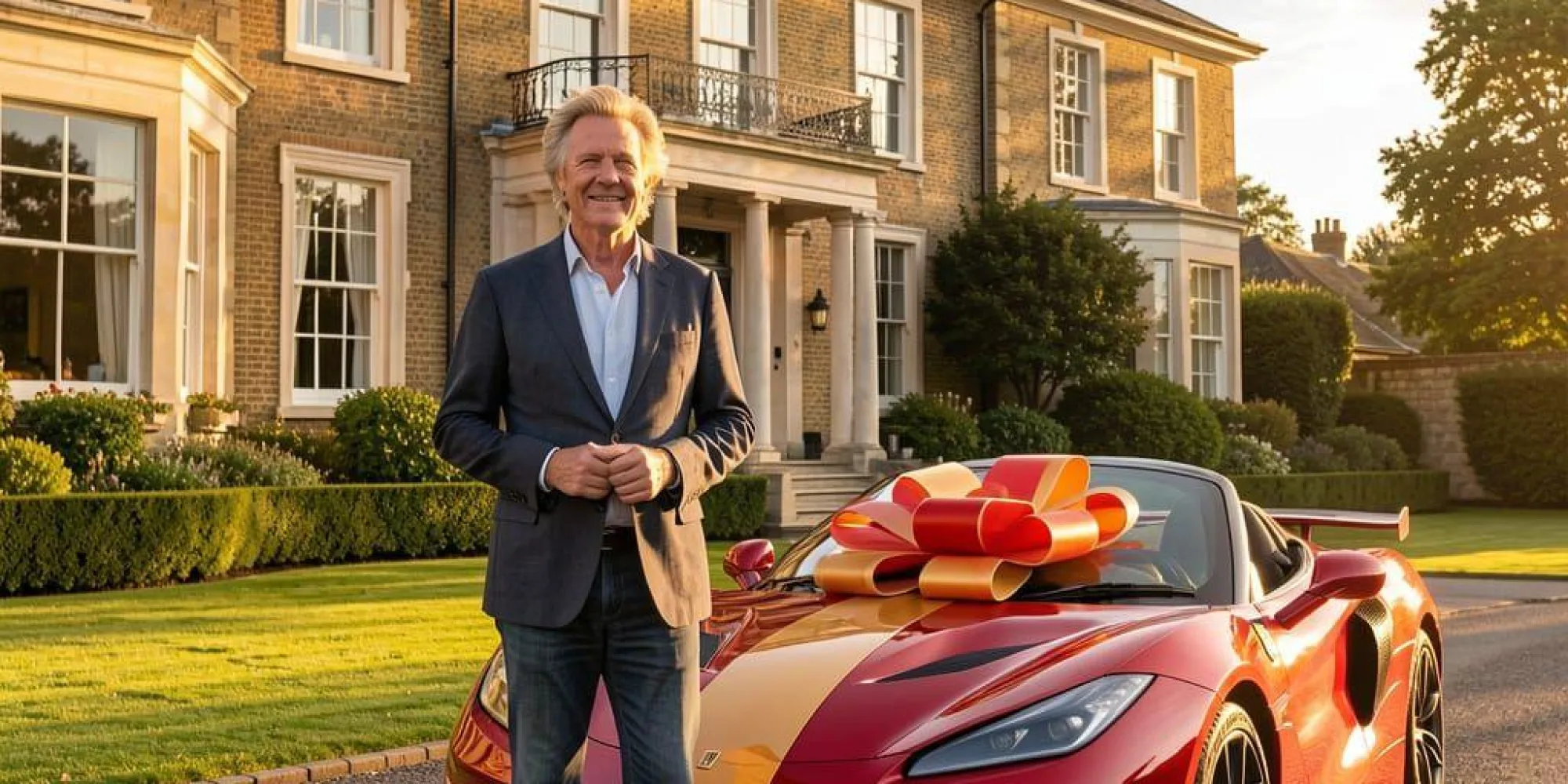
I was dressed in the Silicon Valley VC uniform of khakis and a blue chambray shirt, schlepping a backpack with a heavy HP laptop — the kind that would lose all your data if you drove over a speed bump — and a Canon PowerShot digital camera roughly the size of a brick. As I walked over a slight rise, I suddenly found myself face‑to‑face with Sir Richard Branson. He was surrounded by assistants, photographers, and models in elegant, slightly revealing outfits, all gathered around a red Maserati 3200 GT wrapped in a giant ribbon.
So I did what any brash Australian would do. I pulled out my Canon, walked straight up to Sir Richard, and asked if he would take a photo with me. He said yes. I handed my early‑adopter digital camera to a photographer who looked like he had been sent by The Times, with two Leica film cameras hanging around his neck. He tried to hide his disdain for the ridiculous toy I had handed him, but Sir Richard had sanctioned it, so he took the shot. I still don’t know what powered my smile more — the photo with Branson or the photographer being forced to kowtow to an upstart colonial.
Most people know a lot about Branson because he is not shy of publicity, but to me his greatest strength is simple: he integrated his personal mission into the company’s DNA. His mission was to have fun. That was it. And because it was authentic, it became the cultural engine of the Virgin Group. Fun created creativity. Fun created innovation. Fun created a brand that felt alive.
His other values followed the same pattern. He embraced risk because he was wired for adventure. He put people first because he genuinely liked people. He cared about social responsibility because he believed business should be a force for good. He thought outside the box because he had never lived inside one. Virgin did not succeed because of a mission statement. It succeeded because Branson’s personal mission — fun, adventure, people, mischief, possibility — became the company’s operating system.
That is the lesson. Good leaders point to the mission on the wall. Great leaders embody it. They let their personal mission seep into the culture, the decisions, the hiring, the brand, the energy. They build companies that feel like extensions of their own soul.

About Jason Bresnehan
Jason writes in a modular, mind‑drift style that moves between business, recovery, faith, anthropology, and the oddities of everyday life without warning or apology. His work blends operator‑grade clarity with sideways narrative turns — the kind that start in a boardroom, drift through Scripture or Tasmanian riverbanks, and land in a piece of doctrine you didn’t see coming.
He has spent years helping organisations and people get unstuck, and his writing reflects the same instinct: take something messy, name it cleanly, and make it usable. His pieces — whether on addiction, Catholic symbolism, business operators, or human quirks — aren’t lectures. They’re field notes. Observations. Fragments designed for real people in real moments, including the tired executive delayed in an airport lounge at 11:45pm.
Jason publishes micro‑chapters as he writes them — standalone pieces that don’t follow a cadence or a theme. They accumulate over time into a larger body of work, shaped by curiosity, faith, operator discipline, and a refusal to perform — just get outcomes.
Founder of the Hadspen Foundation, Jason is committed to building frameworks for spiritual recovery that are both repeatable and personal. His writing is guided by discernment, narrative cadence, and the belief that doctrine should support—not overshadow—the human story.