
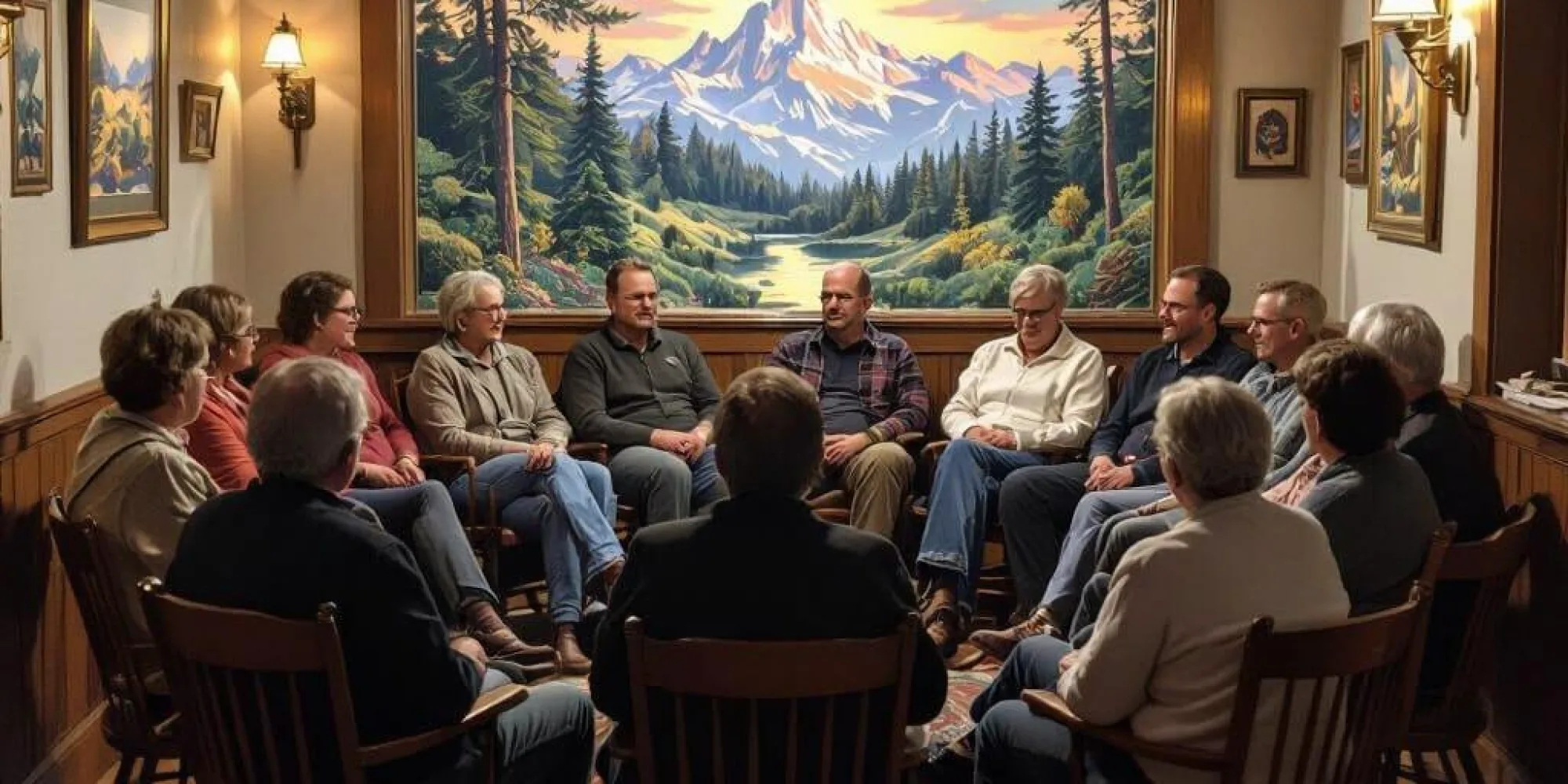
The Architecture of the AA Table
Luke 14:1, 7–14 isn’t just a dinner scene—it’s a masterclass in organisational behaviour. And Alcoholics Anonymous lives it out in every room, every country, every circle of chairs.
Jesus watches guests scramble for the best seats. Then He flips the script:
“Take the lowest place.”
“Invite the poor, the crippled, the lame, the blind.”
“Don’t seek repayment—seek righteousness.”
AA doesn’t quote this Gospel.
It embodies it.
1. The Table Without a Head
“When he noticed how the guests picked the places of honor…” (v.7)
In the world, we chase status.
In AA, we check it at the door.
There are no head seats.
No reserved chairs.
No nameplates.
No hierarchy.
Recovery Insight:
AA rooms are decentralised, unfunded, and unbranded.
No government grants. No corporate sponsors. No celebrity endorsements.
Just chairs in a circle—and a shared mission.
Whether you’re a rich boy, a pensioner, a tradie, a teacher, black, white, male, female, Catholic, atheist, or Brethren—
You are an alcoholic.
And you are equal.
2. The Guest List That Breaks the Rules
“When you give a banquet, invite the poor, the crippled, the lame, the blind…” (v.13)
Jesus names the excluded.
AA welcomes them.
In any given room, you’ll find:
- A retired CEO beside a man just released from prison.
- A single mum beside a war veteran.
- A teenager beside a pensioner.
- A Brethren concreter beside a Catholic consultant.
Recovery Insight:
AA is the banquet.
And the guest list is radical.
There is no dress code.
No doctrinal test.
No cultural filter.
You walk in broken.
You are greeted with, “Welcome.”
And someone says, “Me too.”
3. The Reward That Isn’t Repayment
“Although they cannot repay you, you will be repaid at the resurrection of the righteous.” (v.14)
AA is built on service.
We sponsor newcomers who might relapse.
We make coffee for people who might never say thank you.
We share stories that might never be acknowledged.
Recovery Insight:
The reward isn’t applause.
It’s peace.
It’s purpose.
It’s the quiet joy of knowing you helped someone stay sober one more day.
And that’s enough.
The Fixer’s Reflection: The Greatest Organisation I Never Designed
As a Fixer, I’ve studied governance models, built systems, and advised boards.
But AA?
It’s the most effective, resilient, and spiritually aligned organisation I’ve ever encountered.
- No CEO.
- No budget.
- No marketing team.
- No external funding.
- No coercion.
- No judgment.
And yet—millions are healed.
Every day.
It’s not just a fellowship.
It’s a miracle of decentralised grace.
Closing Thought
Luke 14 isn’t just a parable.
It’s a prophecy of how AA would one day operate.
It teaches us:
- That the lowest seat is the safest.
- That the guest list should be wild and wide.
- That the reward is not repayment—but resurrection.
So pull up a chair.
There’s no head of the table.
Just a circle.
And you are welcome.

Jason Bresnehan
Jason is a fixer—of businesses, of broken momentum, and occasionally of entire spiritual frameworks gone sideways. He speaks fluent boardroom and AA, deploys Catholic doctrine with the subtlety of a scalpel, and isn’t afraid to lace his insights with both war-room metaphors and dad-sermon tenderness.
Founder of Evahan, a consultancy built on the idea that legacy and liquidity don’t need to fight, Jason draws on 30 years of commercial grit, tactical leadership, and emotional radar to help people rebuild what entropy took. He works with companies, communities, and recovery misfits alike—often using the same principles to sort both cap tables and chaotic lives.
He’s finalising his first book—a memoir-in-doctrine forged in the trenches of alcoholic recovery, endurance motorsport obsession, and spiritual trench marches. That book, partly teased on his Pursuit of Luck blog, is the cornerstone of a broader movement to connect practical wisdom with satirical grit, spiritual heat, and a recovery roadmap lined with breadcrumbs and tactical grace.