St. Thomas More – The Conscience Contrarian
Born: February 7, 1478, London, England
Died: July 6, 1535, Tower Hill, London
Age at Death: 57
Canonized: May 19, 1935
Feast Day: June 22
Legacy
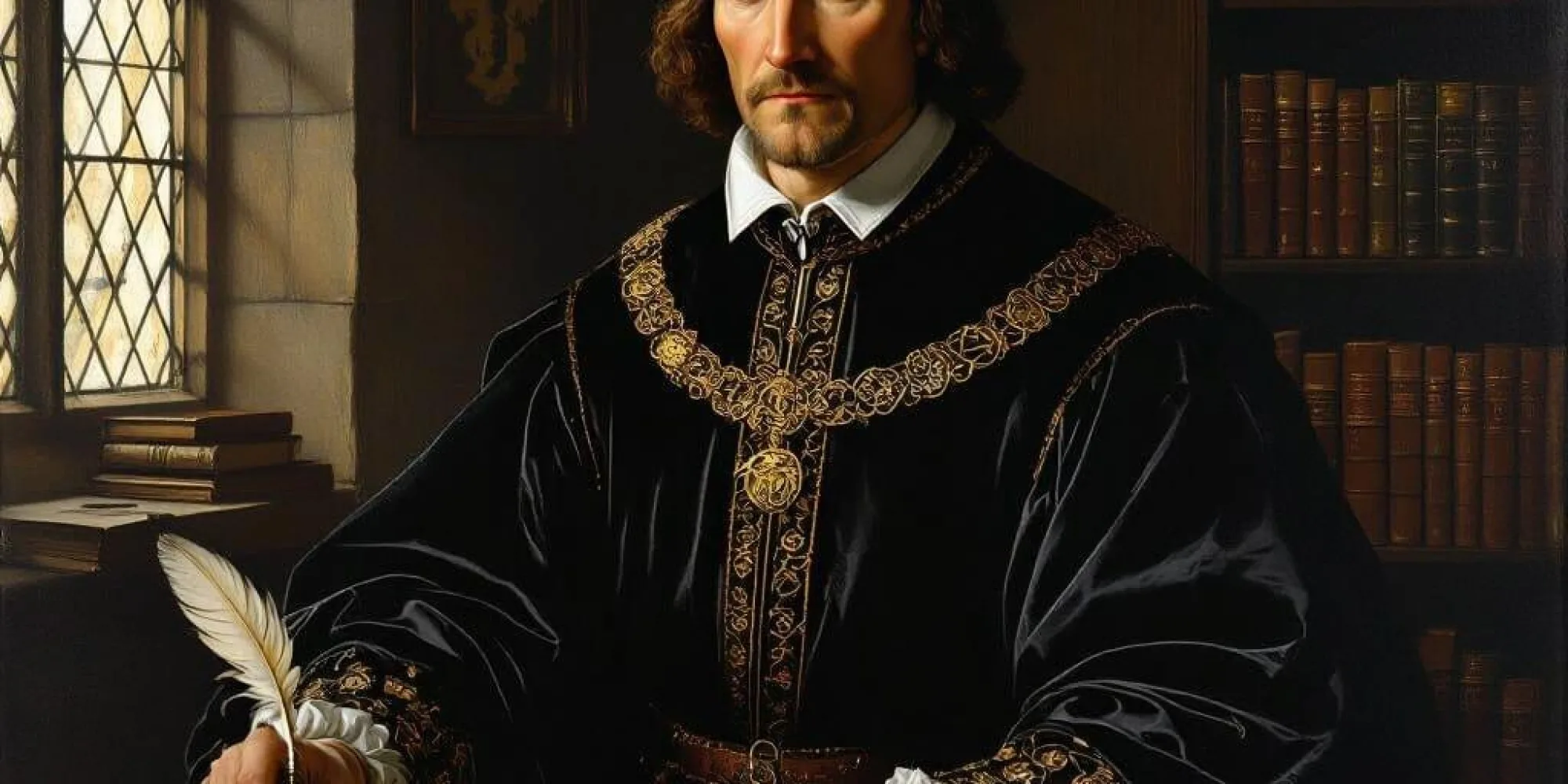
St. Thomas More was a Renaissance humanist, lawyer, and statesman who became Lord Chancellor of England under Henry VIII. He authored Utopia, a political satire envisioning an ideal society, and stood as a fierce defender of conscience and Catholic orthodoxy. When Henry VIII demanded allegiance to the newly formed Church of England, More refused to compromise his beliefs. His silence spoke louder than protest, and his execution made him a martyr for integrity.
Why He Belongs in Saints & Sinners
More didn’t just write about ideal societies—he died defending the principles that make them possible. In an age of ideological drift, he’s the patron saint of institutional integrity. His refusal to bend to corrupted authority wasn’t loud—it was lethal. He reminds us that conscience isn’t a luxury for leaders—it’s their compass.
Tactical Profile
- Fixer Archetype: Policy Disruptor
- Modern Role: Integrity coach in institutions suffering from ideological drift
- Key Moves:
- Dismantled false consensus with surgical essays
- Refused allegiance to corrupted authority
- Died for conscience—quietly, firmly
Plug-In Principles
- Truth isn’t democratic
- Virtue doesn’t scale—it must be chosen
- Leadership without conscience leads to collapse
Metaphor: His silence was his sword.
Quote: “When statesmen forsake their own private conscience… they lead their country by a short route to chaos.””

Jason Bresnehan
Jason is a fixer—of businesses, of broken momentum, and occasionally of entire spiritual frameworks gone sideways. He speaks fluent boardroom and AA, deploys Catholic doctrine with the subtlety of a scalpel, and isn’t afraid to lace his insights with both war-room metaphors and dad-sermon tenderness.
Founder of Evahan, a consultancy built on the idea that legacy and liquidity don’t need to fight, Jason draws on 30 years of commercial grit, tactical leadership, and emotional radar to help people rebuild what entropy took. He works with companies, communities, and recovery misfits alike—often using the same principles to sort both cap tables and chaotic lives.
Jason draws deep inspiration from historical figures who got results—especially those who led from the margins, built with scarce resources, and refused to be shackled by conventional wisdom. He’s known for assembling unorthodox teams of passionate experts to solve complex problems in chaotic environments. Whether in boardrooms, recovery communities, or legacy disputes, Jason’s approach is rooted in common purpose, tactical innovation, and the belief that clarity thrives when paradigms are challenged.