
Recognition in Fellowship and Recovery
The Gospel, Sunday, 19 April 2026: Luke 24:13–35
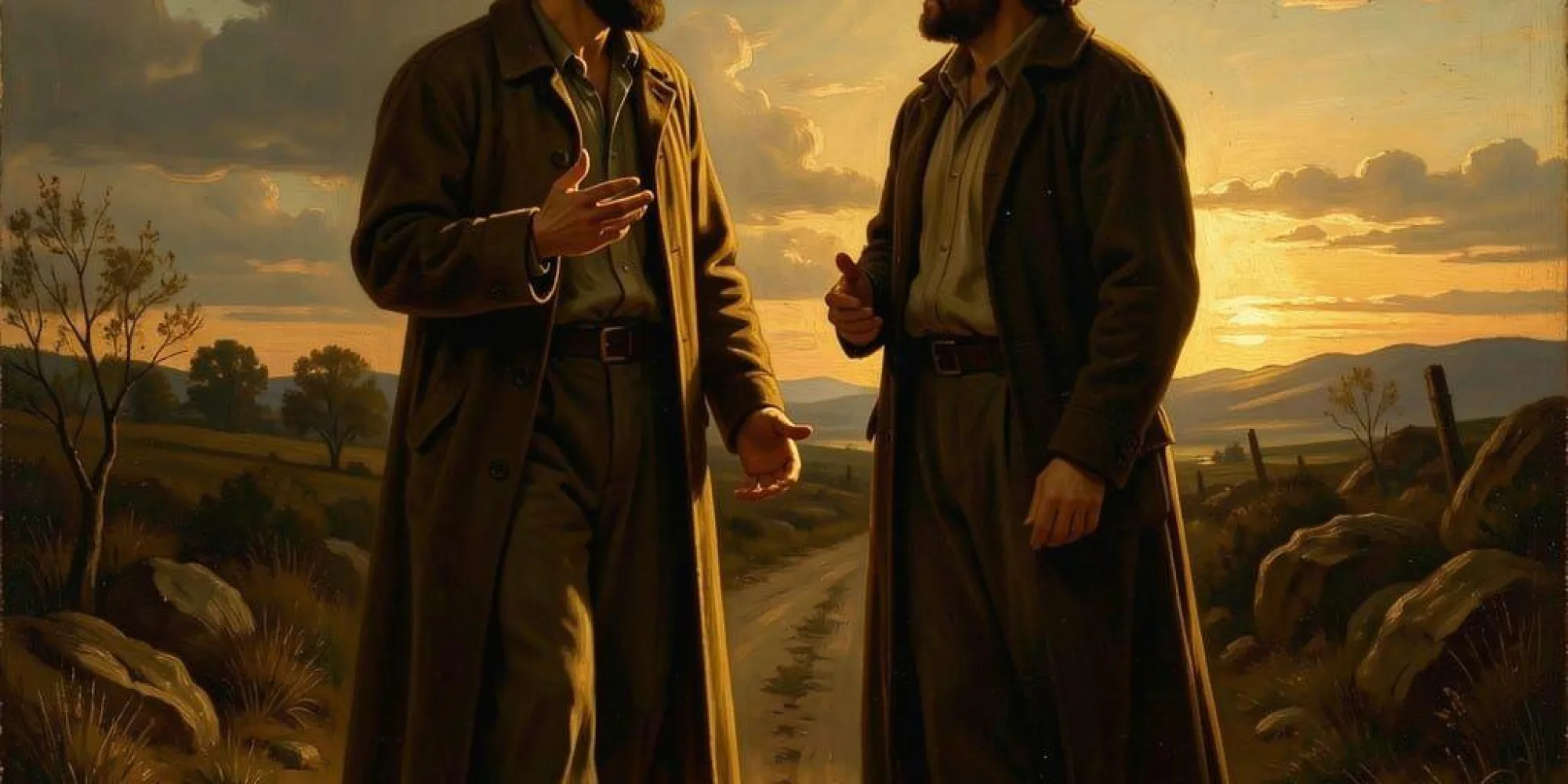
Behold, two of them were going that very day to a village named Emmaus, which was sixty stadia from Jerusalem. They talked with each other about all of these things which had happened. While they talked and questioned together, Jesus himself came near, and went with them. But their eyes were kept from recognizing him. He said to them, “What are you talking about as you walk, and are sad?” One of them, named Cleopas, answered him, “Are you the only stranger in Jerusalem who doesn’t know the things which have happened there in these days?” He said to them, “What things?” They said to him, “The things concerning Jesus, the Nazarene, who was a prophet mighty in deed and word before God and all the people; and how the chief priests and our rulers delivered him up to be condemned to death, and crucified him. But we were hoping that it was he who would redeem Israel. Yes, and besides all this, it is now the third day since these things happened. Also, certain women of our company amazed us, having arrived early at the tomb; and when they didn’t find his body, they came saying that they had also seen a vision of angels, who said that he was alive. Some of us went to the tomb, and found it just like the women had said, but they didn’t see him.” He said to them, “Foolish people, and slow of heart to believe in all that the prophets have spoken! Didn’t the Christ have to suffer these things and to enter into his glory?” Beginning from Moses and from all the prophets, he explained to them in all the Scriptures the things concerning himself. They drew near to the village, where they were going, and he acted like he would go further. They urged him, saying, “Stay with us, for it is almost evening, and the day is almost over.” He went in to stay with them. When he had sat down at the table with them, he took the bread and gave thanks. Breaking it, he gave it to them. Their eyes were opened, and they recognized him; and he vanished out of their sight. They said to one another, “Weren’t our hearts burning within us, while he spoke to us along the way, and while he opened the Scriptures to us?” They rose up that very hour, returned to Jerusalem, and found the eleven gathered together, and those who were with them, saying, “The Lord is risen indeed, and has appeared to Simon!” They related the things that happened along the way, and how he was recognized by them in the breaking of the bread.
Two disciples walk the road to Emmaus. They’re grieving. Disoriented. Processing trauma. And Jesus walks with them—but they don’t recognize Him. That’s recovery. That’s fellowship. That’s the long walk from confusion to clarity.
The Road Is Part of the Revelation
Jesus doesn’t interrupt. He doesn’t announce Himself. He walks. He listens. He lets them speak. That’s the model. In recovery, the road matters. The walking matters. The conversation matters. Recognition doesn’t come from a flash of light—it comes from shared steps.
Recovery Is a Slow Reveal
The disciples don’t recognize Jesus until the breaking of the bread. Until the moment of intimacy. Until the moment of shared ritual. That’s recovery. You don’t always recognize grace in the beginning. You don’t always see God in the fog. But you keep walking. You keep talking. And eventually—clarity comes.
Fellowship as Sacred Ground
The road to Emmaus is a fellowship moment. Two people walking together. Processing pain. Asking questions. That’s the AA room. That’s the rehab hallway. That’s the late-night phone call. Fellowship isn’t just support—it’s sacred. It’s where Jesus shows up. Not always visibly. But always meaningfully.
Recognition Is a Spiritual Skill
The disciples say, “Were not our hearts burning within us?” That’s the signal. That’s the spiritual telemetry. Recognition isn’t just visual—it’s emotional. It’s intuitive. It’s the burning heart. The goosebumps. The moment when something lands and you know it’s real.
In recovery, recognition is sharpened by surrender. By service. By stillness. You learn to see God in the ordinary. In the conversation. In the coffee cup. In the folding chair.
Jesus Disappears—But the Mission Remains
As soon as they recognize Him, He vanishes. That’s not abandonment. That’s commissioning. Jesus doesn’t stay because the mission now belongs to them. They’ve seen. They’ve felt. They’ve understood. Now they must go.
In recovery, that’s the moment you stop asking, “Is this real?” and start saying, “I know what I must do.” You carry the message. You walk with others. You become the fellowship.
The Emmaus Model
Recovery isn’t a solo sprint. It’s an Emmaus walk. It’s shared steps. Shared stories. Shared silence. And eventually—shared recognition. Jesus walks with us. Even when we don’t see Him. Even when we’re confused. Even when we’re grieving. And when we finally recognize Him, we realize: He was there the whole time.

About Jason Bresnehan
Jason writes in a modular, mind‑drift style that moves between business, recovery, faith, anthropology, and the oddities of everyday life without warning or apology. His work blends operator‑grade clarity with sideways narrative turns — the kind that start in a boardroom, drift through Scripture or Tasmanian riverbanks, and land in a piece of doctrine you didn’t see coming.
He has spent years helping organisations and people get unstuck, and his writing reflects the same instinct: take something messy, name it cleanly, and make it usable. His pieces — whether on addiction, Catholic symbolism, business operators, or human quirks — aren’t lectures. They’re field notes. Observations. Fragments designed for real people in real moments, including the tired executive delayed in an airport lounge at 11:45pm.
Jason publishes micro‑chapters as he writes them — standalone pieces that don’t follow a cadence or a theme. They accumulate over time into a larger body of work, shaped by curiosity, faith, operator discipline, and a refusal to perform — just get outcomes.
Founder of the Hadspen Foundation, Jason is committed to building frameworks for spiritual recovery that are both repeatable and personal. His writing is guided by discernment, narrative cadence, and the belief that doctrine should support—not overshadow—the human story.