
Once I Had a Name for It, I Fell in Love with It
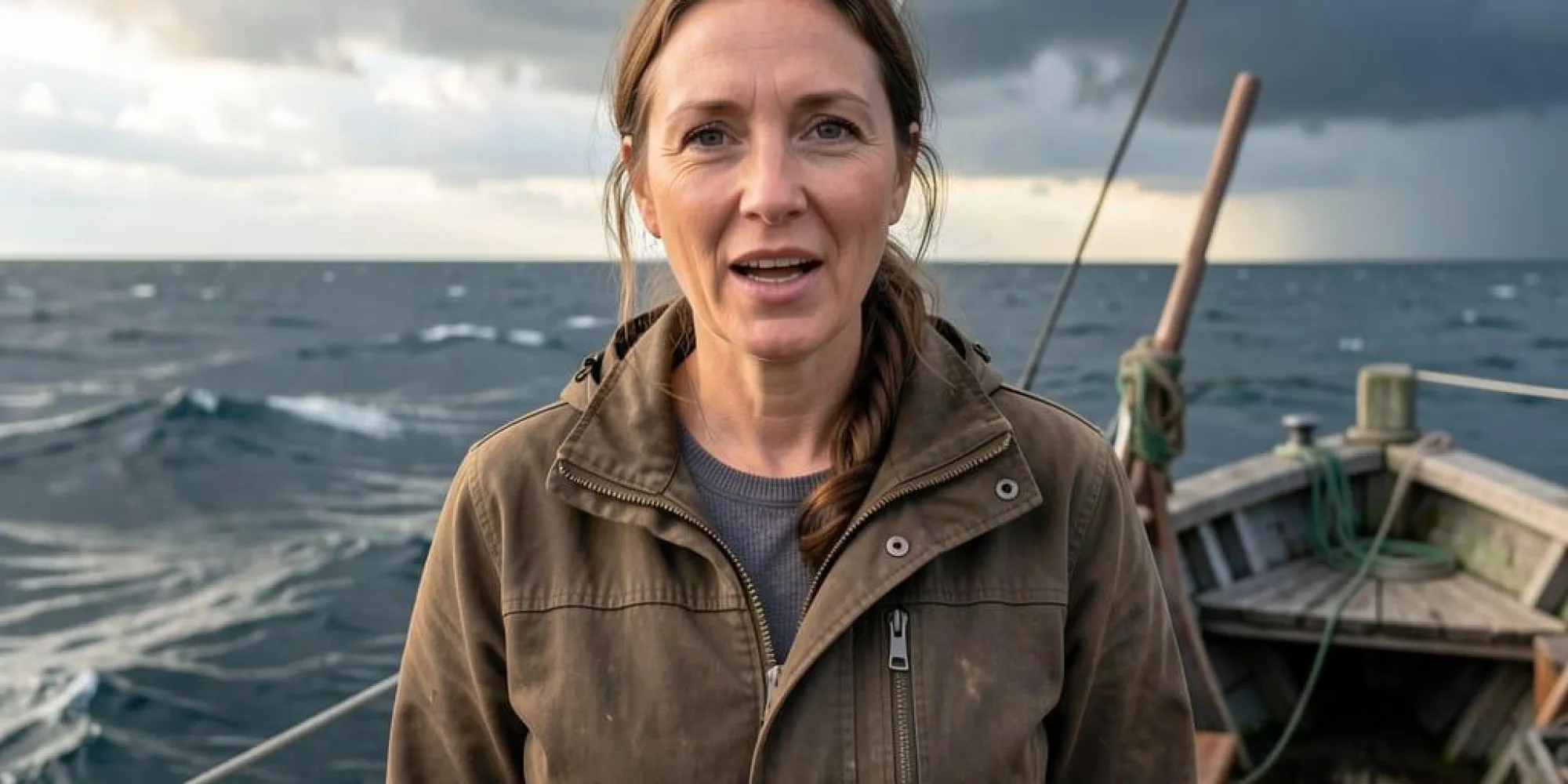
I was watching a British TV series called Annika, starring Nicola Walker — an actress who can communicate an entire emotional history with a single raised eyebrow. I was excited when I found it. Northern Scotland, cold water, colder cases, and a Marine Homicide Unit that seems to pull more bodies out of the sea than fish.
A couple of minutes into episode one, Annika turns and talks directly to the camera.
My first reaction was immediate:
Oh no. I don’t like this.
It felt like lazy writing — a shortcut to jam in context and backstory without letting it emerge naturally through character, conversation, or memory. But I kept watching, and later I asked my trusted adviser (AI) what exactly I was reacting to.
Turns out there’s a name for it.
Breaking the fourth wall.
Annika speaking directly to the audience — as if we’re standing in the room with her — is a deliberate narrative device. And in this show, it’s not used for comedy (Fleabag), meta‑humour (Deadpool), or irony (The Office). It’s something else entirely:
• a character study
• an internal monologue
• a darkly comic confession
• emotional shorthand
It’s unusual in crime drama, which is why it felt so strange at first.
But it’s not lazy.
It’s precise.
Emotional Compression Without the Melodrama
Breaking the fourth wall lets the show compress emotional exposition without resorting to:
• flashbacks
• trauma montages
• heavy dialogue
• side characters explaining her psychology
Instead, Annika simply tells you what she’s feeling — dry, wry, contained — and somehow more honest than any dramatic reconstruction could ever be.
In the first episode, she casually mentions that when she was thirteen, she once towed a dead body behind her boat back to shore. No music. No flashback. No slow‑motion trauma.
Just a matter‑of‑fact confession delivered straight to camera.
Because she is indifferent, you become indifferent.
Her emotional temperature becomes yours.
It prevents exaggeration.
It prevents mythologising.
It prevents the viewer from over‑reading the scar.
The fourth‑wall break becomes a kind of emotional calibration tool — a way of boxing the viewer into the character’s reality.
Confessional Narration, Not Voiceover
Annika uses a sub‑type of fourth‑wall breaking sometimes called confessional narration or direct‑address commentary. It’s not documentary style. It’s not mockumentary. It’s not voiceover.
It’s a fictional character treating the viewer as a private confidant.
And it works because Annika is:
• emotionally guarded
• socially awkward
• intellectually overactive
• traumatised but functional
• self‑aware but not self‑indulgent
Talking to the camera lets her:
• reveal without emoting
• confess without collapsing
• explain without over‑explaining
• be funny without breaking tone
It’s a pressure valve — and a window into her interior life that never breaks the realism of the world.
Where the Name Comes From
This is the part that made everything click.
In traditional theatre — especially 18th and 19th century European theatre — the stage was imagined as a three‑walled room:
1. left wall
2. right wall
3. back wall
The audience sits where the fourth wall would be.
Actors pretend the audience isn’t there.
The audience pretends they’re peeking into a sealed room.
Breaking the fourth wall is when a character:
• looks at the audience
• speaks to the audience
• acknowledges the fiction
• comments from inside the story
They punch a hole in that invisible wall and let you in.
Once you understand the physical origin — the geometry of it — the term becomes unforgettable.
Why I Fell in Love With It
Once I had a name for it, the whole technique transformed.
It wasn’t lazy.
It wasn’t a shortcut.
It was efficient.
Elegant.
Emotionally precise.
A systems‑guy’s dream.
Annika isn’t showing you her trauma.
She’s showing you her relationship to her trauma.
And that’s a far more interesting story.

About Jason Bresnehan
Jason writes in a modular, mind‑drift style that moves between business, recovery, faith, anthropology, and the oddities of everyday life without warning or apology. His work blends operator‑grade clarity with sideways narrative turns — the kind that start in a boardroom, drift through Scripture or Tasmanian riverbanks, and land in a piece of doctrine you didn’t see coming.
He has spent years helping organisations and people get unstuck, and his writing reflects the same instinct: take something messy, name it cleanly, and make it usable. His pieces — whether on addiction, Catholic symbolism, business operators, or human quirks — aren’t lectures. They’re field notes. Observations. Fragments designed for real people in real moments, including the tired executive delayed in an airport lounge at 11:45pm.
Jason publishes micro‑chapters as he writes them — standalone pieces that don’t follow a cadence or a theme. They accumulate over time into a larger body of work, shaped by curiosity, faith, operator discipline, and a refusal to perform — just get outcomes.
Founder of the Hadspen Foundation, Jason is committed to building frameworks for spiritual recovery that are both repeatable and personal. His writing is guided by discernment, narrative cadence, and the belief that doctrine should support—not overshadow—the human story.