My Genetics Nit Noi Brendan Behan
I’m writing this in Pattaya, where nit noi — “just a little” — is one of the most common phrases you hear from expats and locals alike. It’s often heard with expats explaining their lack of Thai language skills, or ferangs trying to reassure their Thai wives that they’ve only had “nit noi” beers — when she knows very well how many they’ve had, because she counted them all. It’s a phrase that carries a shrug, a sense of understatement, a way of softening the edges. But when it comes to alcoholism, nit noi is a dangerous illusion.
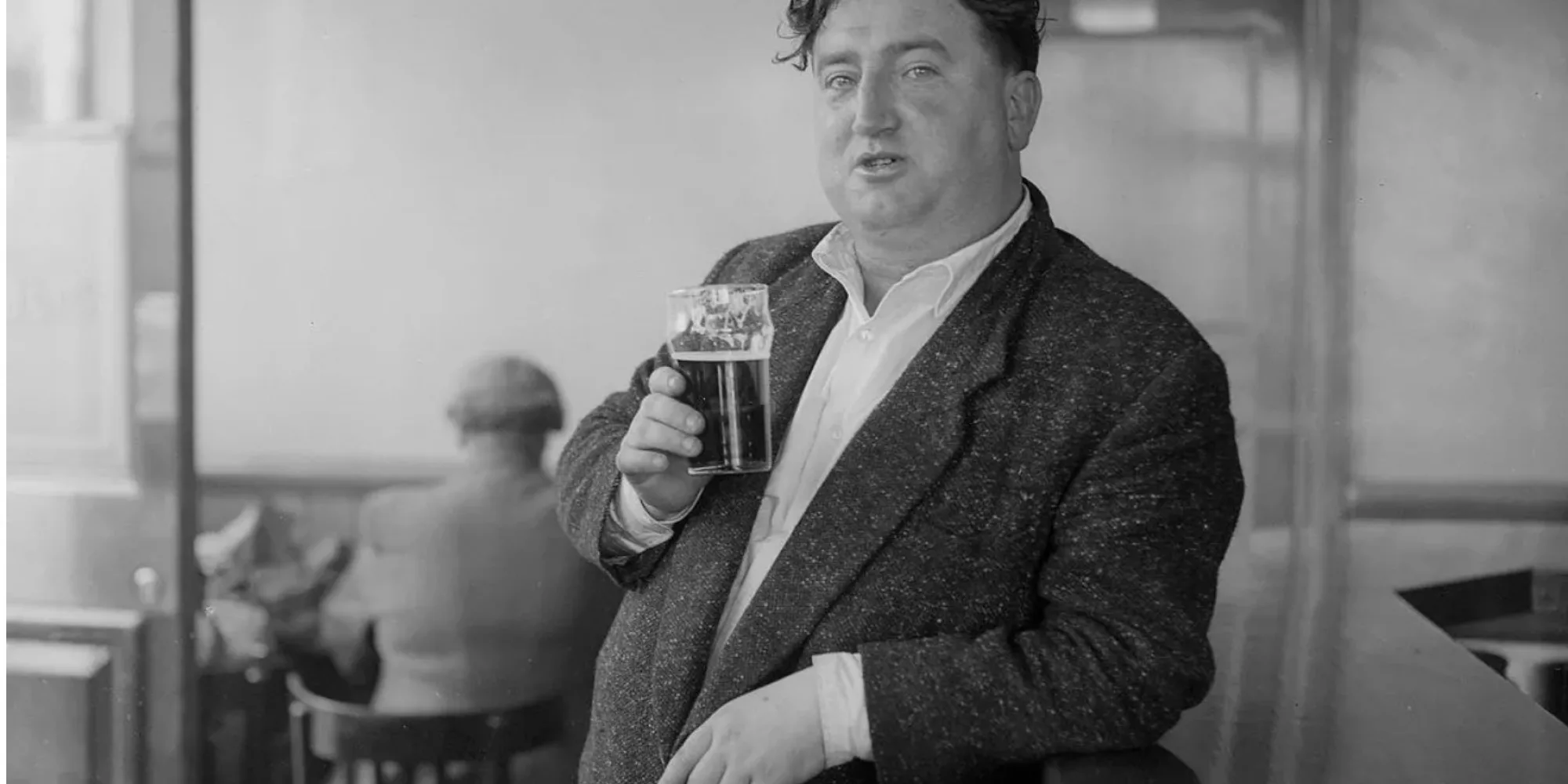
It’s not a stretch to think I might carry a nit noi Brendan Behan in my genetics — a trace of that Irish defiance and self‑destructive force running through the bloodline. The famous saying I mentioned in an earlier post simply called “Alcoholism” — “One drink is too many and a thousand not enough” — is attributed to Behan, the Dublin writer whose wit and rebellion were inseparable from his drinking.
It’s not a stretch to think I might carry a nit noi Brendan Behan in my genetics — a trace of that Irish defiance and self‑destructive force running through the bloodline. The famous saying I mentioned in an earlier post simply called “Alcoholism” — “One drink is too many and a thousand not enough” — is attributed to Behan, the Dublin writer whose wit and rebellion were inseparable from his drinking.
Brendan was born in Dublin in 1923, into a family steeped in republican politics and Irish identity. From the beginning, his life was marked by defiance. As a teenager he joined the IRA, an act that led to imprisonment in both England and Ireland. Those years behind bars were formative: they sharpened his wit, deepened his cynicism about authority, and gave him the raw material for his most enduring works.
Behan’s writing was a weapon as much as an art. Borstal Boy captured the brutality and absurdity of prison life, while The Quare Fellow exposed the rituals of execution and the hypocrisies of the system. His plays and prose were laced with humor, satire, and a distinctly Irish lyricism. He could turn a phrase that cut like a blade, yet always carried the rhythm of Dublin speech.
But Behan’s life was also shadowed by alcoholism. He drank heavily from a young age, and his reputation as a hard‑living, hard‑drinking rebel became inseparable from his literary fame. Alcohol shortened his life, and by the time he died in 1964 at just forty‑one, he had become both a celebrated writer and a cautionary tale. His brilliance was undeniable, but so too was the tragedy of wasted potential.
Even his surname tells a story. Behan (Ó Beacháin) carries the Gaelic cadence of “h,” “a,” and “n” — a rhythm that echoes in my own name, Bresnehan, and in Brosna, the Kerry town my ancestors came from, halfway between Limerick and Tipperary. These names are more than identifiers; they are echoes of heritage, syllables that preserve the music of the Irish language and the memory of place.
In Behan’s rebellion, I hear the defiance of a people unwilling to bow. In his writing, I see the power of words to challenge and endure. And in his surname, I feel the resonance of my own — a reminder that heritage is carried not only in bloodlines but in the very sound of our names. Brendan Behan’s life was short, but his story is long. It is the story of Ireland itself: proud, rebellious, lyrical, and scarred. And in the cadence of his name, I find a connection to mine, a thread of Gaelic heritage that binds past to present, rebellion to remembrance.
And perhaps I have inherited some alcoholic genes from the general pool of “Irish blood.” For sure I inherited some genetic imprint from my great‑great‑grandfather John Bresnehan, who was an Irish convict, sent to Van Diemen’s Land for the term of his natural life, for shooting at an English tax collector and for having an illegal still. The last offence is a pretty strong clue. You can’t help but imagine that maybe his five years as a farm laborer on Maria Island, before he was pardoned and given free settler status, were a circuit breaker for what might otherwise have been a life of alcoholism.
On my maternal side, my great‑great‑grandfather Bill Lovatt — the Westbury butcher, SP bookie, and moving‑pictures promoter — was a heavy drinker, much to the dismay of his wife’s Protestant family. My grandfather Stan rarely drank; I’ve probably consumed more whisky than Stan drank water. My father drank consistently and at times heavily, but he never fell into the grips of full‑blown alcoholism.
My Uncle Terrence had what today would be called PTSD. At just 17, he was shot in World War II and mistakenly placed in a shallow grave under fire. He was later recovered and survived, but the trauma never left him. A surgical metal plate in his head restored some physical strength, yet sobriety and serenity never fully returned.
Anyway, genetics is just an excuse. It’s one potential prong in alcoholism. If you’ve got the genes, then you’ve got the genes. The real matter is two important things: how you counteract your genes, and how you choose to live beyond them.

About Jason Bresnehan
Jason is a writer and recovery advocate whose work explores the intersection of Catholic faith and the lived experience of addiction. His books and essays weave scripture with the rhythms of everyday life, showing how grace can surface in the most ordinary encounters.
Through A Catholic Gospel Journey – Through the Lens of Alcohol Recovery and related projects, Jason offers reflections that connect the Sunday readings to the struggles and victories of recovery. His approach is rooted in clarity, rhythm, and respect for tradition, while remaining accessible to those navigating the challenges of addiction and renewal.
Founder of the Hadspen Foundation, Jason is committed to building frameworks for spiritual recovery that are both repeatable and personal. His writing is guided by discernment, narrative cadence, and the belief that doctrine should support—not overshadow—the human story.