
I’m Not Playing Hemingway
People who know my history might look at this trip and think I’ve slipped back into old patterns — the fast moves, the sudden flights, the big swings. In my venture‑capital years, I’d visit twelve U.S. cities in just ten days. I once flew into a cotton‑farm turnaround with a liquidator, a lawyer, a security guard carrying shotguns, and the heir to a technology fortune — the kind of entrance that felt more like a covert operation than a business trip. And Thailand — I’d return from Pattaya after six weeks, then be back on a plane five days later. That was my modus operandi.
This trip looks similar on the surface, but the engine underneath is different. Yes, the commercialisation of a GFRP manufacturing technology was the business anchor. But I also came here with two deliberate tests in mind.
1. The Hard‑Core Sobriety Test
I wanted to put myself back into environments that once owned me — bars, clubs, expat haunts, places where I’d be drunk by 9 p.m. and drinking vodka at 6:30 a.m. to suppress the shakes.
So I went back to the same streets, the same venues, the same hours.
And nothing in me wanted a drink.
Not suppressed.
Not managed.
Just gone.
That alone would have made the trip worth it.
2. The Writer’s Cliché Test
The second test was quieter, almost embarrassing to admit. I wanted to see whether there was any truth to the old cliché — the tortured writer escaping their normal life to find inspiration in a new one.
Let me be clear:
I’m not tortured.
I’m not a literary genius.
I’m not playing Hemingway.
I’m just a bloke who suspected that stepping out of my normal life might sharpen something in me.
And it did.
When you remove yourself from your usual environment:
• the noise drops
• the obligations loosen
• the identity scaffolding falls away
• the noticing sharpens
• the writing deepens
• the spiritual telemetry becomes clearer
This isn’t romance.
It isn’t self‑mythology.
It’s a known phenomenon among anyone who works with inner material — writers, monks, founders, people rebuilding their lives.
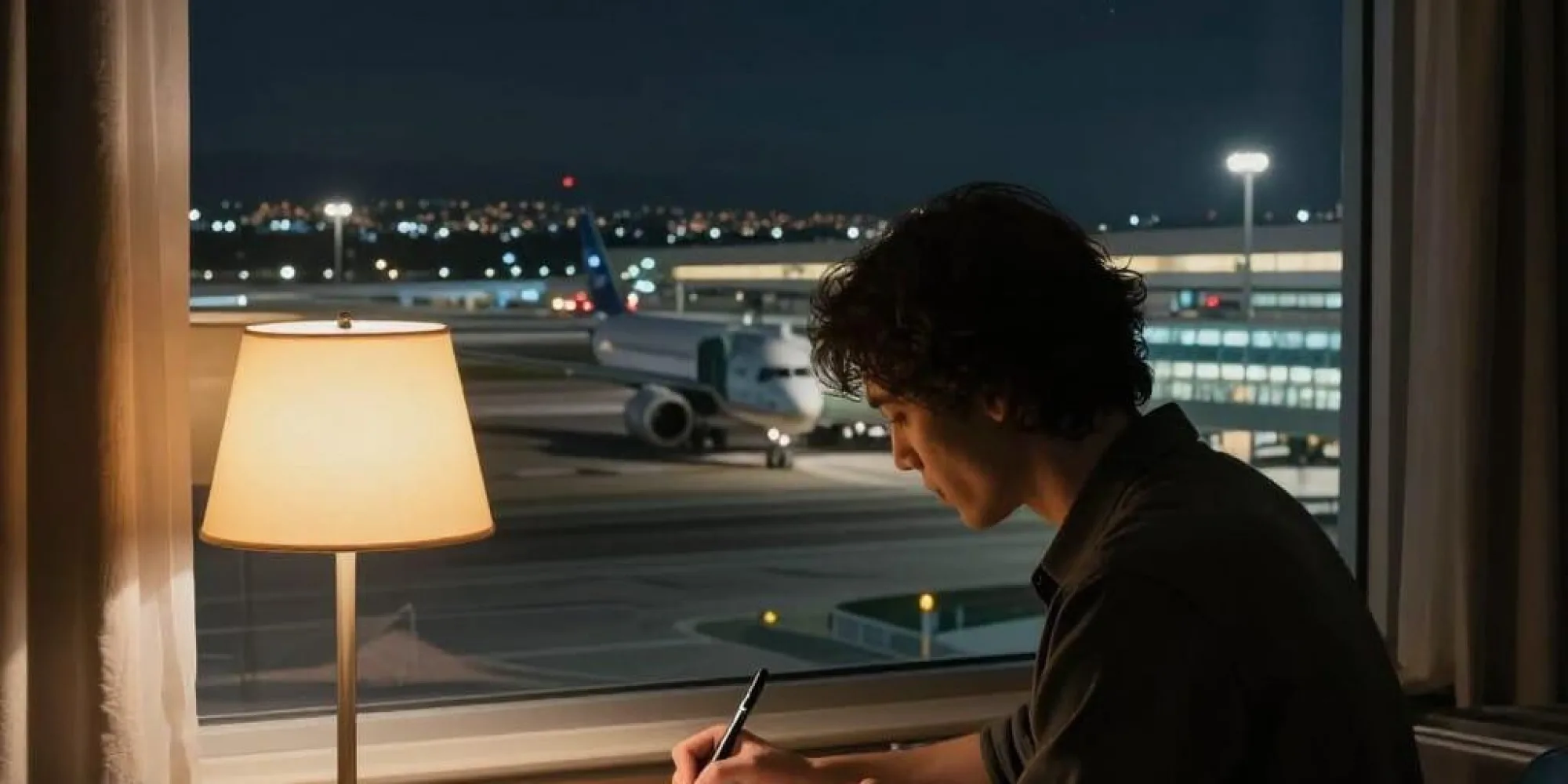
And with my southern‑hemisphere body clock waking me at 3 a.m., I suddenly had long, quiet hours to write. Not forced. Not tortured. Just available.
The Realisation
I didn’t come to America to play at being a writer.
I came to see whether the life I’m shaping has room for writing — real writing — not as a performance, but as a practice.
And the answer surprised me.
I’m not playing Hemingway.
I’m not pretending to be someone I’m not.
I’m simply discovering that when I step out of my old life, the work finds me more easily.
The sobriety held.
The writing flowed.
The wind shifted.
And for the first time in decades, I’m not running from myself.
I’m walking toward the man I’m becoming.

About Jason Bresnehan
Jason is a writer and recovery advocate whose work explores the intersection of Catholic faith and the lived experience of addiction. His books and essays weave scripture with the rhythms of everyday life, showing how grace can surface in the most ordinary encounters.
Through A Catholic Gospel Journey – Through the Lens of Alcohol Recovery and related projects, Jason offers reflections that connect the Sunday readings to the struggles and victories of recovery. His approach is rooted in clarity, rhythm, and respect for tradition, while remaining accessible to those navigating the challenges of addiction and renewal.
Founder of the Hadspen Foundation, Jason is committed to building frameworks for spiritual recovery that are both repeatable and personal. His writing is guided by discernment, narrative cadence, and the belief that doctrine should support—not overshadow—the human story.