
Emotional Bookmaker
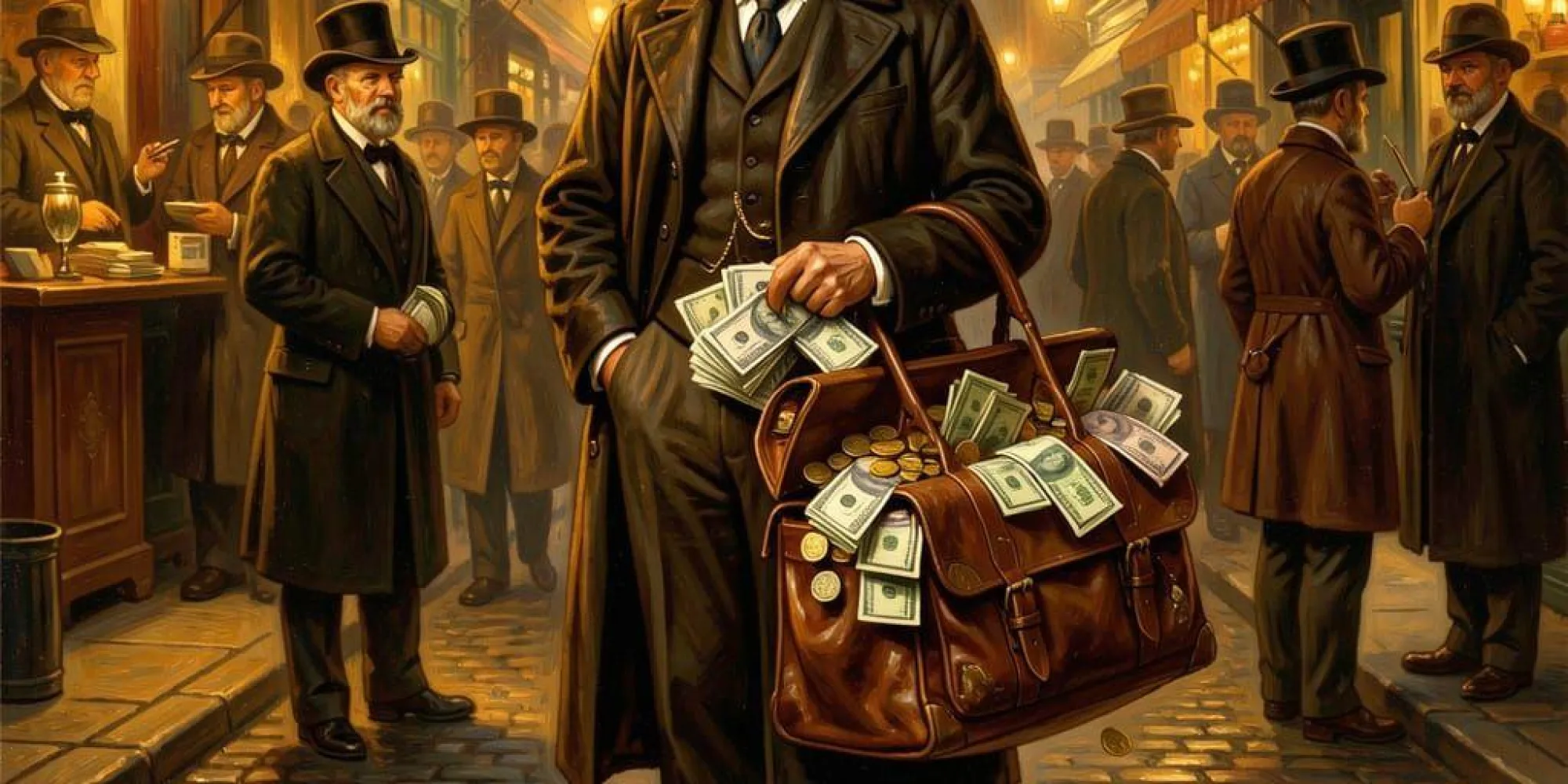
There is a phrase I carried for years before I understood it. Emotional bookmaking. It is the habit of assigning odds to your own decisions based not on reality, but on confidence, adrenaline, hope, and whatever emotional cocktail is running through your bloodstream at the time. I did it for decades. I would walk into a deal, a venture, an idea, a renovation, a partnership, convinced the odds were seventy–thirty in my favour when they were never anything close to that. They were fifty–fifty at best. But confidence is a powerful drug, and I was a generous bookmaker.
The best illustration of emotional bookmaking I ever saw wasn’t in business. It was in my hometown, at the Launceston Cup. The winner that year was a horse called Free Beer. You can look it up. Nineteen ninety‑five, then again in nineteen ninety‑six. Longest‑priced winner in the history of the race. Sixty‑six to one. And then it backed it up the following year just to prove it wasn’t a cosmic accident.
Free Beer nearly broke the local bookmakers. Not because of the physics of racing, but because of the psychology of punters. The name alone was an emotional magnet. Free Beer. Of course it would win. Every man and his dog put money on it. Champagne, white wine, red wine, beer, fascinators, suits that only come out once a year, and the collective delusion that losing money is fine because it’s the Cup and it’s a fun day out. Emotion drove the betting. Emotion distorted the odds. And the horse came home.
That day taught me something I didn’t fully understand until much later: emotion is the worst bookmaker in the world. It inflates the odds. It whispers that the long shot is destiny. It convinces you that your confidence is a form of prophecy. And I did the same thing for years — not at the track, but in my own life.
One of the smaller examples was the time I invested in Tasmanian Indigenous bush foods. We were getting attention, even some media interest. I teamed up with a chef and a few others and bought three thousand dollars’ worth of wild‑harvested pepper berries. I took advice from scientists at the Department of Agriculture and stored them in one of their industrial freezers. Experts involved. Tick. Science involved. Tick. Emotional odds: seventy–thirty. Reality: mould. The entire batch had to be thrown out.
So what, you might say. But I was twenty. I was renovating an investment property on a credit card with seventeen percent interest. I had fingers in too many pies and not enough cash to cover the pies. Three thousand dollars was not a rounding error. It was a hit. And it was not the only one. This pattern repeated for years. Confidence outrunning clarity. Emotional odds replacing real odds. The bookmaker in my head offering generous lines on things that had no business being priced that way.
It took hitting a hard rock bottom for the pattern to finally reveal itself. In recovery, when the noise dropped and the emotional static cleared, I realised I had been running an internal betting agency for most of my adult life. I was the bookmaker, the punter, and the horse. And the odds were always wrong. Not maliciously. Not recklessly. Just emotionally. Confidence is useful, but when it gets away from you, it becomes a distortion field. It burns money, time, energy, and relationships. It stretches you thin. It makes you try too hard to prove odds that were never real.
That is where the 50:50 Reset came from. It was not a business doctrine at first. It was a survival tool. A way to stop myself from bluffing myself. A way to recalibrate before I sprinted into another seventy–thirty fantasy. The rule is simple. If you think the odds are seventy–thirty, ask yourself one question. Would I still do this if it were fifty–fifty. If the answer is yes, proceed. If the answer is no, step back. Because the truth is that most things are fifty–fifty. The universe is not handing out eighty–twenty opportunities to people who feel confident. It is handing out coin flips.
The 50:50 Reset is not pessimism. It is clarity. It is the override that stops emotional bookmaking from running the show. It forces you to earn your odds. If you want sixty–forty, build the case. If you want seventy–thirty, prove it. If you cannot get past fifty‑five–forty‑five, pivot. Do not stall. Do not fantasise. Do not inflate. Just pivot. And if the worst‑case scenario is a tactical hold rather than a catastrophic loss, take the hold. Protect your capital. Protect your emotional runway. Protect your spiritual runway. You cannot pursue the next opportunity if you are exhausted from trying to prove the last one was seventy–thirty when it was never anything more than a coin toss.
Emotional bookmaking is expensive. It costs money, time, energy, and peace. The 50:50 Reset is the moment the operator stops bluffing himself and starts engineering clarity. It is the moment the bookmaker retires and the adult walks in.

About Jason Bresnehan
Jason writes in a modular, mind‑drift style that moves between business, recovery, faith, anthropology, and the oddities of everyday life without warning or apology. His work blends operator‑grade clarity with sideways narrative turns — the kind that start in a boardroom, drift through Scripture or Tasmanian riverbanks, and land in a piece of doctrine you didn’t see coming.
He has spent years helping organisations and people get unstuck, and his writing reflects the same instinct: take something messy, name it cleanly, and make it usable. His pieces — whether on addiction, Catholic symbolism, business operators, or human quirks — aren’t lectures. They’re field notes. Observations. Fragments designed for real people in real moments, including the tired executive delayed in an airport lounge at 11:45pm.
Jason publishes micro‑chapters as he writes them — standalone pieces that don’t follow a cadence or a theme. They accumulate over time into a larger body of work, shaped by curiosity, faith, operator discipline, and a refusal to perform — just get outcomes.
Founder of the Hadspen Foundation, Jason is committed to building frameworks for spiritual recovery that are both repeatable and personal. His writing is guided by discernment, narrative cadence, and the belief that doctrine should support—not overshadow—the human story.