
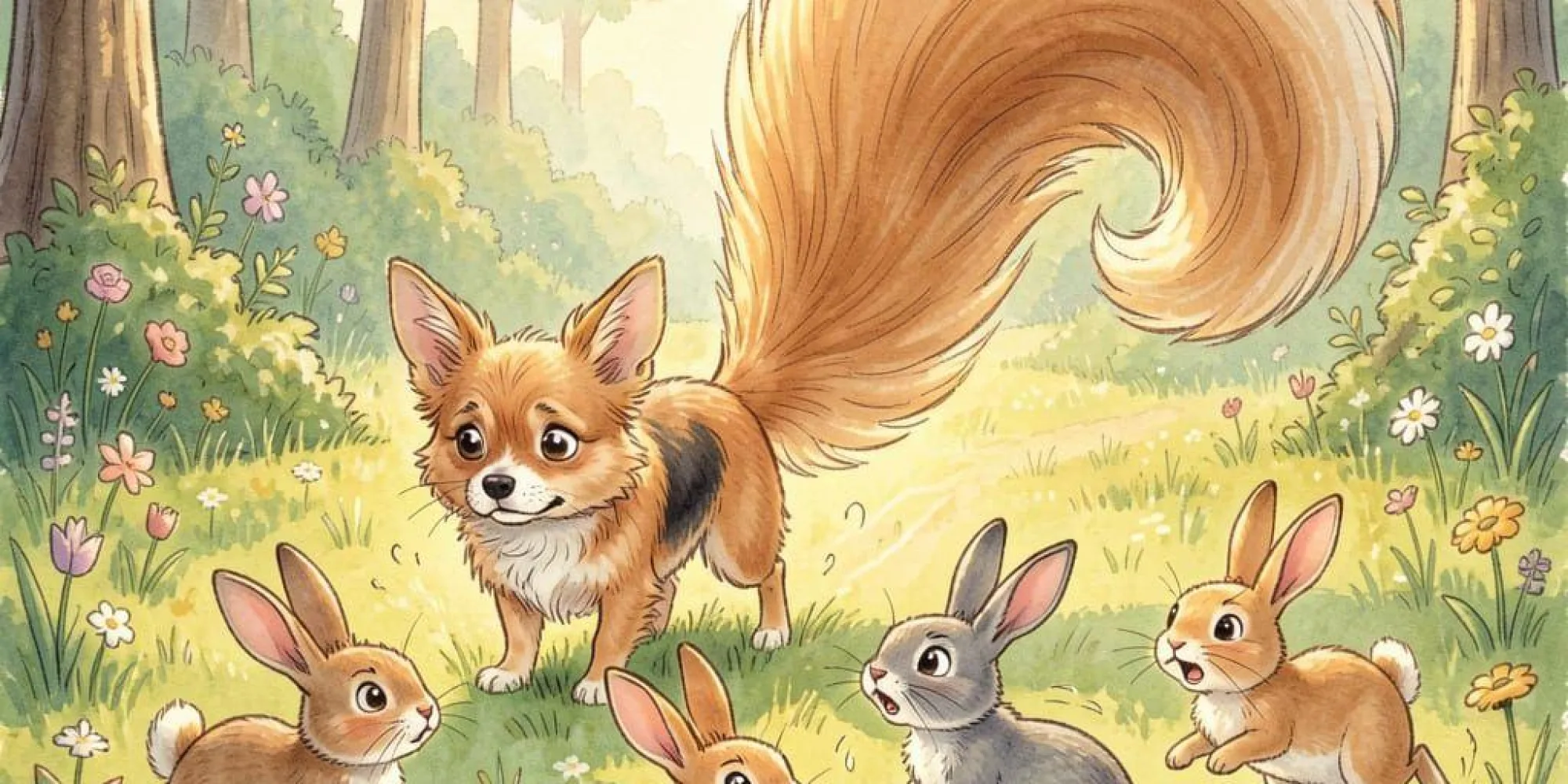
Don't Let the Tail Wag the Dog
Most problems do not begin with conflict. They begin with a mismatch of altitude. A subsystem speaking as if it is upstream. A narrow domain assuming its preferences outrank the mission. A local rule written for internal convenience being applied as if it carries strategic authority. These moments rarely look dramatic, but the pattern underneath them is structural: an inversion of control.
Don’t Let the Tail Wag the Dog is a model for recognising when something downstream begins exerting authority over something upstream. It protects the primary operating reality—the mission, the value‑creating force, the external context—from being bent around a secondary mechanism. It restores proportionality by re‑establishing who leads and who follows.
People often mistake proximity for authority. They assume that because a subsystem touches a process, it should shape it. They assume that because a control exists, it should decide. They assume that because a specialist has depth, they have altitude. None of this is true. The tail is not small because it lacks detail. It is small because it is downstream. It exists to support movement, not determine it. When the tail begins issuing instructions to the dog, the system has inverted.
The model turns on one question:
What is the primary value‑creating force here—and is it still in control.
If the answer is no, the violation is already in motion. This is not a judgement call. It is a structural breach.
This pattern appears everywhere. A compliance mechanism slowing down the very work it is meant to protect. A tool dictating behaviour instead of enabling it. A policy overriding professional judgement. A support function reshaping strategy. A local optimisation forcing the entire system to contort around it. None of these forces are malicious. They simply expand until they meet resistance. When no resistance appears, they assume authority.
These situations are often dismissed as minor. “It’s just a login.” “It’s just a workflow.” “It’s just how the system works.” That instinct is wrong. Small demands from downstream actors are how Risk Chain Reactions begin.
A concession becomes a precedent. The precedent becomes an expectation. The expectation becomes a dependency. The dependency becomes fragility.
By the time anyone notices, the primary operating reality has been bent around something that was never meant to lead. Most organisational failures do not begin with catastrophic decisions. They begin with repeated, unexamined concessions to things that never earned the right to decide.
This model enforces proportional authority. A subsystem does not outrank a mission. A tool does not outrank professional judgement. An internal rule does not outrank external reality. Authority must scale with impact. When something local begins demanding structural concessions from something primary, the model should trigger immediately.
Modern systems are saturated with tails. Technology stacks, compliance layers, governance structures, and specialist domains have multiplied faster than clarity about where they belong. Tails have become louder, more confident, and more insistent. The cost of letting them lead appears later as friction, cognitive drag, wasted time, compromised independence, blurred roles, escalating complexity, and loss of professional gravity. Each consequence is a signal of authority inversion, not inconvenience.
The model remains simple because diagnosing overreach does not require complexity. If something downstream is forcing you to reorganise something upstream, the tail is wagging the dog.
This model interacts naturally with others. It pairs with Risk Chain Reactions because tail‑driven decisions tend to cascade. It precedes the Tunnel Solution because the correct response is often dimensional change, not argument. It intersects with Forced Scarcity because unnecessary accommodations are usually what give tails their leverage.
When in doubt, ask: Would this decision exist if the tail disappeared tomorrow. Is this requirement shaping behaviour beyond its legitimate scope. Who benefits from this control—and who carries the cost. Is this supporting movement, or dictating it. If the answer unsettles you, the model has done its work.
This thinking model protects direction. Dogs exist to move. Tails exist to follow. When that relationship reverses, motion becomes confused, progress slows, and risk accumulates quietly. That is why this model matters.

About Jason Bresnehan
Jason writes in a modular, mind‑drift style that moves between business, recovery, faith, anthropology, and the oddities of everyday life without warning or apology. His work blends operator‑grade clarity with sideways narrative turns — the kind that start in a boardroom, drift through Scripture or Tasmanian riverbanks, and land in a piece of doctrine you didn’t see coming.
He has spent years helping organisations and people get unstuck, and his writing reflects the same instinct: take something messy, name it cleanly, and make it usable. His pieces — whether on addiction, Catholic symbolism, business operators, or human quirks — aren’t lectures. They’re field notes. Observations. Fragments designed for real people in real moments, including the tired executive delayed in an airport lounge at 11:45pm.
Jason publishes micro‑chapters as he writes them — standalone pieces that don’t follow a cadence or a theme. They accumulate over time into a larger body of work, shaped by curiosity, faith, operator discipline, and a refusal to perform — just get outcomes.
Founder of the Hadspen Foundation, Jason is committed to building frameworks for spiritual recovery that are both repeatable and personal. His writing is guided by discernment, narrative cadence, and the belief that doctrine should support—not overshadow—the human story.