
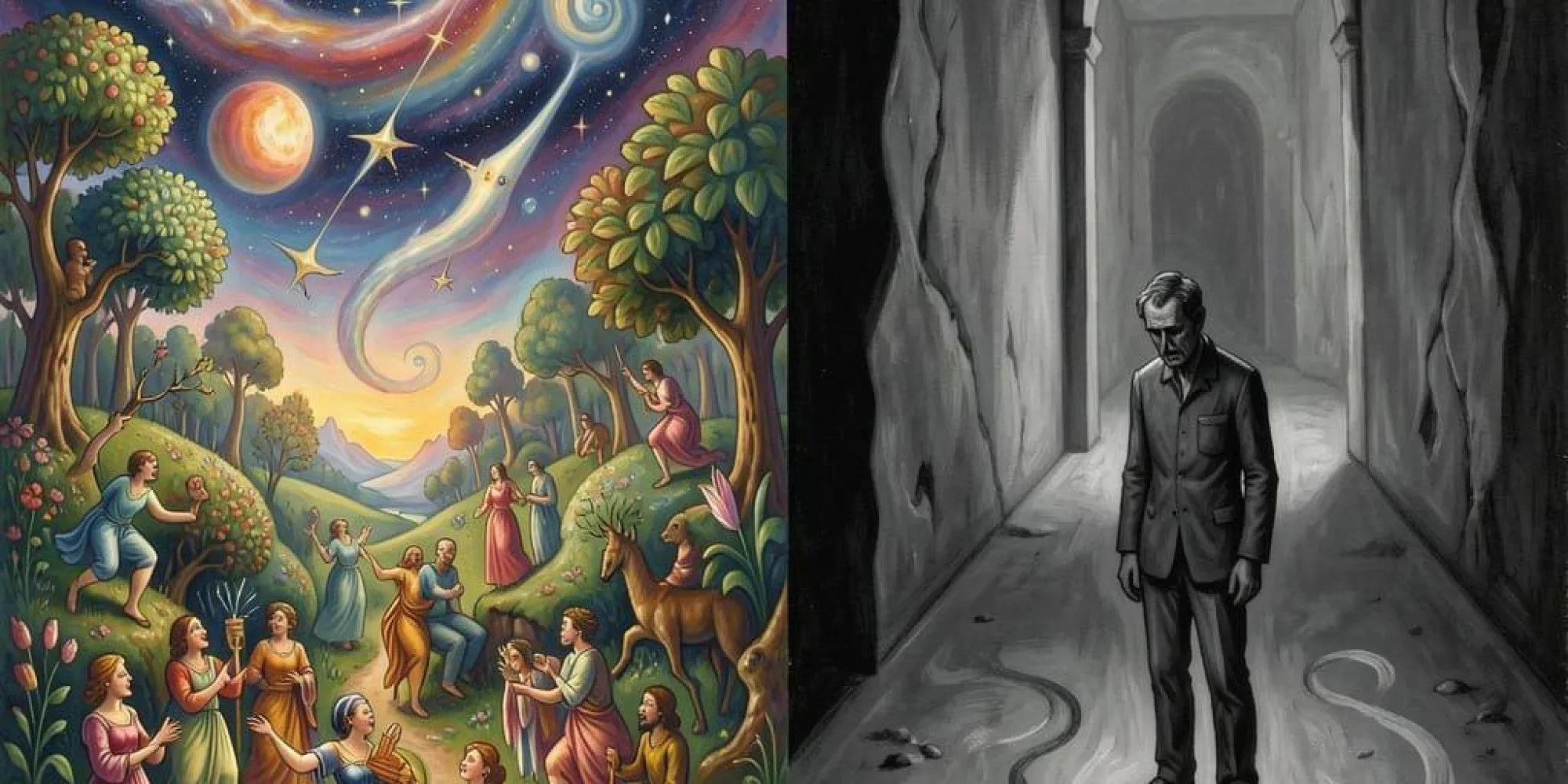
Disconnection and Three Contributory Root Causes of Alcoholism and Addiction
People sometimes ask me how you give up alcohol, or what causes a person to become an alcoholic. If the setting demands a short answer, I give them three words: disconnection from creation. Most people give me a strange look, even people who have known me for decades. They imagine I am trying to be philosophical or clever or deliberately esoteric, but I am not. I believe that at the heart of alcoholism, and addiction more broadly, is a disconnection from people, from the natural world, from creatures, and from the wider cosmos. It is a collapse of relationship with the world you were born into.
But I will step back and frame it more clearly. There are three contributory root causes of addiction. One is well known, almost a cliché, but it is real. The second and third are rarely discussed, yet they drove my alcoholism and the alcoholism of millions of people like me. There are more than three contributory causes, of course, but these three share a common thread: disconnection from creation, and most of all, disconnection from God’s children, which is to say, people.
The first contributory root cause is trauma‑driven disconnection. This is the one society recognises because it is visible. Childhood chaos, abuse, neglect, violence, war, generational alcoholism, abandonment. These experiences create emotional scar tissue. They disconnect a person from trust, safety, and belonging. But trauma alone does not create alcoholism. Plenty of people with trauma never drink. Plenty of people with trauma find meaning, faith, purpose, community, and they heal. Trauma becomes dangerous only when paired with spiritual disconnection.
The second contributory root cause is the overactive mind. This is the invisible one, the one people do not understand because they cannot see it. A restless mind. Fast processing. Frustration with slow systems. Boredom with routine. Mental noise. Difficulty switching off. Feeling out of sync with the world’s tempo. This was my pathway. And again, an overactive mind does not equal alcoholism. But an overactive mind without spiritual grounding becomes a torture chamber. Alcohol becomes the temporary bridge between the speed of your mind and the speed of the world. The danger is not the mind. The danger is the absence of meaning to anchor it.
The third contributory root cause is unearned‑success disconnection. This is the one almost no one talks about. It is not about whether the success was unearned. It is about whether the person feels it was unearned. Actors and performers often fall into this category. Chosen, not built. Rewarded for being selected. Punished internally for not knowing why. Identity becomes external. Imposter syndrome. Volatility. Pressure. No internal anchor. Heirs and heiresses show the same pattern. Life came pre‑loaded. No earned pride. No purpose. No identity separate from wealth. Nothing to point to and say, I built that. A drift sets in, quiet but corrosive. And again, unearned success does not cause addiction. But unearned success without spiritual grounding creates a void. And voids get filled.
All three contributory root causes, trauma, overactive mind, and unearned success, only become dangerous when combined with the spiritual malady. This is the spine of the doctrine. A lack of spirituality, meaning, purpose, or connection to something higher than self. In AA language, the spiritual malady. In my language, disconnection from God’s creation. This is the part that matters most. A traumatised person with spiritual grounding may never drink. An overactive mind with spiritual grounding becomes a gift, not a curse. An heir with spiritual grounding becomes a steward, not a statistic. It is the absence of meaning that turns contributory root causes into accelerants.
The framework is simple. Trauma‑driven disconnection: visible wounds that disconnect a person from trust and belonging. Overactive‑mind disconnection: invisible restlessness that disconnects a person from the world’s tempo. Unearned‑success disconnection: identity voids that disconnect a person from purpose and self‑worth. And beneath all of them, the spiritual malady, the absence of meaning, purpose, and connection to something higher. This is the universal root cause. The three contributory causes only matter because they interact with this one.
This is not theory. It is the truth I lived. And the truth millions live quietly, painfully, and often alone.

About Jason Bresnehan
Jason writes in a modular, mind‑drift style that moves between business, recovery, faith, anthropology, and the oddities of everyday life without warning or apology. His work blends operator‑grade clarity with sideways narrative turns — the kind that start in a boardroom, drift through Scripture or Tasmanian riverbanks, and land in a piece of doctrine you didn’t see coming.
He has spent years helping organisations and people get unstuck, and his writing reflects the same instinct: take something messy, name it cleanly, and make it usable. His pieces — whether on addiction, Catholic symbolism, business operators, or human quirks — aren’t lectures. They’re field notes. Observations. Fragments designed for real people in real moments, including the tired executive delayed in an airport lounge at 11:45pm.
Jason publishes micro‑chapters as he writes them — standalone pieces that don’t follow a cadence or a theme. They accumulate over time into a larger body of work, shaped by curiosity, faith, operator discipline, and a refusal to perform — just get outcomes.
Founder of the Hadspen Foundation, Jason is committed to building frameworks for spiritual recovery that are both repeatable and personal. His writing is guided by discernment, narrative cadence, and the belief that doctrine should support—not overshadow—the human story.