
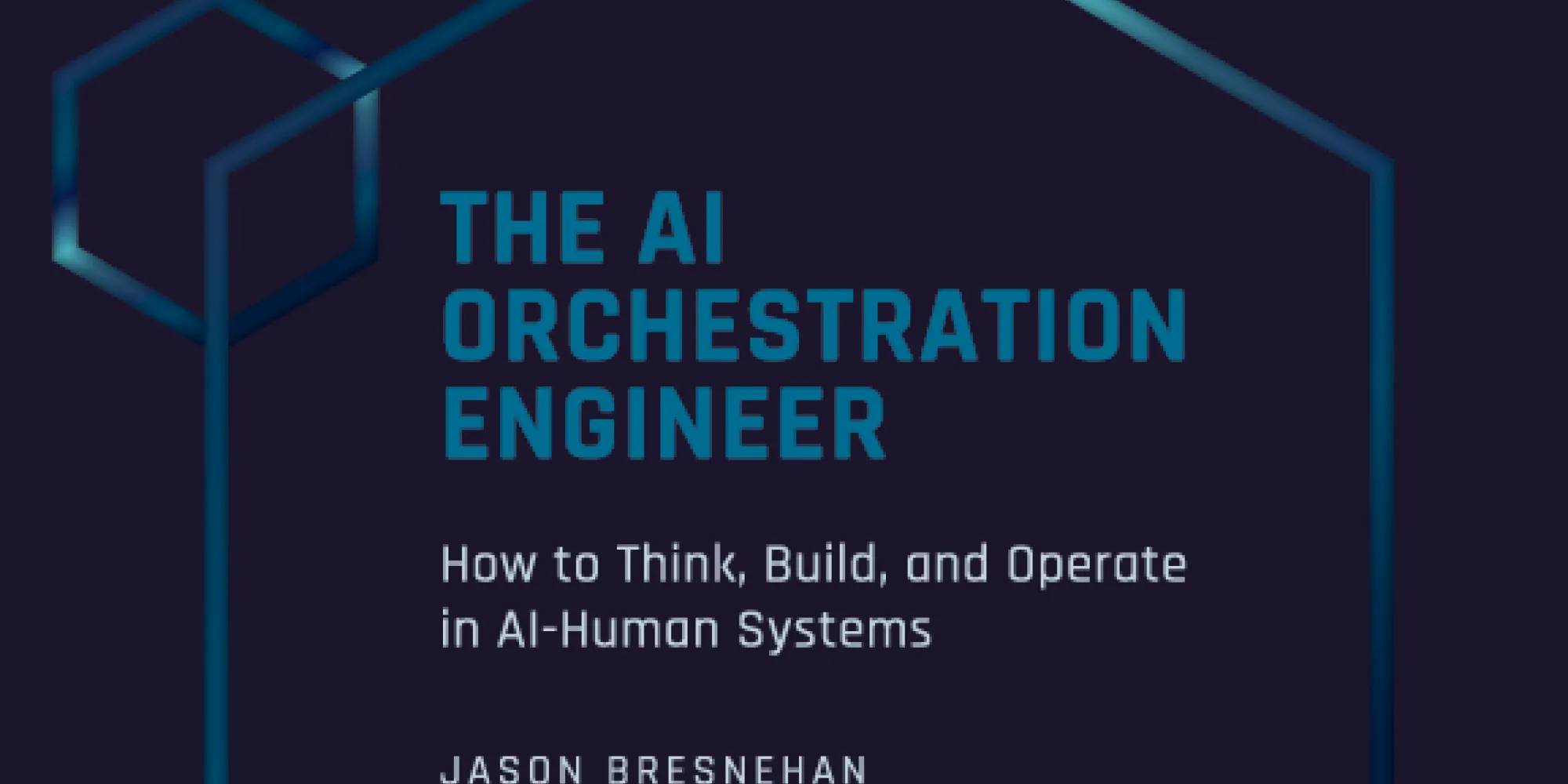
The AI Orchestration Engineer
My book, The AI Orchestration Engineer, is now available on Amazon. The book explores a simple idea: AI success is rarely a technology problem.
More often, it is an orchestration problem. The challenge is not access to AI. Powerful AI tools are now available to almost everyone. The real challenge is understanding how AI interacts with the human ecosystem of a business — employees, contractors, customers, suppliers and leadership teams — and integrating those interactions into practical systems that produce better outcomes.
I didn't write this book because I wanted to become "the AI guy". I wrote it because I have spent most of my career solving problems. Building systems and creating Commercial Traction are simply two of the ways those problems get solved. AI happens to be one of the most powerful amplifiers we have ever been given.
At the heart of the book are 33 AI Orchestration Modes that describe the human capabilities required to turn AI capability into meaningful results. It is not a book about coding. It is not a book about building AI models. It is a book about the people who learn to orchestrate them.
The AI Orchestration Engineer
Evahan Systems
Ultimately, I still believe what I have always believed.
Strong Business Systems create Commercial Traction.
AI is simply one more tool that can help get you there.

About Jason Bresnehan
Jason writes in a modular, mind‑drift style that moves between business, recovery, faith, anthropology, and the oddities of everyday life without warning or apology. His work blends operator‑grade clarity with sideways narrative turns — the kind that start in a boardroom, drift through Scripture or Tasmanian riverbanks, and land in a piece of doctrine you didn’t see coming.
He has spent years helping organisations and people get unstuck, and his writing reflects the same instinct: take something messy, name it cleanly, and make it usable. His pieces — whether on addiction, Catholic symbolism, business operators, or human quirks — aren’t lectures. They’re field notes. Observations. Fragments designed for real people in real moments, including the tired executive delayed in an airport lounge at 11:45pm.
Jason publishes micro‑chapters as he writes them — standalone pieces that don’t follow a cadence or a theme. They accumulate over time into a larger body of work, shaped by curiosity, faith, operator discipline, and a refusal to perform — just get outcomes.
Founder of the Hadspen Foundation, Jason is committed to building frameworks for spiritual recovery that are both repeatable and personal. His writing is guided by discernment, narrative cadence, and the belief that doctrine should support—not overshadow—the human story.